Key takeaways
- Most Indian handmade rug production for export sits in the Bhadohi-Mirzapur belt of Uttar Pradesh, the region covered by the “Handmade Carpet of Bhadohi” geographical indication.
- Judge a manufacturer on loom control, sampling discipline and documentation, not on catalogue photos.
- Approve a CAD map and a physical strike-off before production, and write KPSI, pile height, materials and size tolerance into the purchase order.
- Agree the Incoterm (FOB, CIF or DDP) early, because it decides who books freight, who files the ISF and who clears US customs.
- Duty depends on the HTS chapter 57 classification plus any additional tariffs in force on the entry date, so confirm the current rate with a licensed customs broker.
India combines deep weaving skill, a full supply chain for wool and dyeing, and the capacity to produce anything from a single bespoke piece to a multi-container order. It is also a market where two suppliers quoting the same design can deliver very different rugs. This guide walks US importers, retailers and design firms through the practical side of sourcing hand-knotted rugs from India, from picking a manufacturer to getting the shipment through US customs.
Where India’s handmade rugs are made
The center of the industry is the Bhadohi-Mirzapur carpet belt in eastern Uttar Pradesh, close to Varanasi. In 2010, “Handmade Carpet of Bhadohi” received a geographical indication (GI) tag under Indian law, and most published accounts list nine districts in the covered area, including Bhadohi, Mirzapur, Varanasi, Jaunpur and Prayagraj (Allahabad). Weaving, dyeing, washing and finishing units cluster around these towns, which is why lead times and costs here are often easier to manage than in more scattered regions.
Jaipur, Panipat and Kashmir are other weaving centers, but for wool hand-knotted rugs at commercial volume the Bhadohi belt is usually the first stop.
Know what you are buying: construction types
“Handmade” covers several techniques with different costs, lead times and US tariff classifications, so be precise in your request for quotation:
- Hand-knotted: each knot is tied by hand around warp threads. This is the slowest and most durable construction, and quality is described by knots per square inch (KPSI). See the range on our hand-knotted rugs page.
- Hand-tufted: yarn is punched through a backing cloth with a hand-held tufting gun, then locked with latex and a secondary backing. Faster and usually less expensive than knotting.
- Handloom: pile is formed over rods on a loom, producing loop, cut or combined textures.
- Flat weave (dhurrie, kilim): no pile at all; the pattern comes from interlaced weft.
If you expect hand-knotted, put that and the knot type in writing; mislabeled construction is a common sourcing dispute.
How to choose a hand-knotted rug manufacturer in India
The Bhadohi belt has thousands of businesses, from large exporters to agents who own no looms. Screen them on four points.
1. Confirm they control production
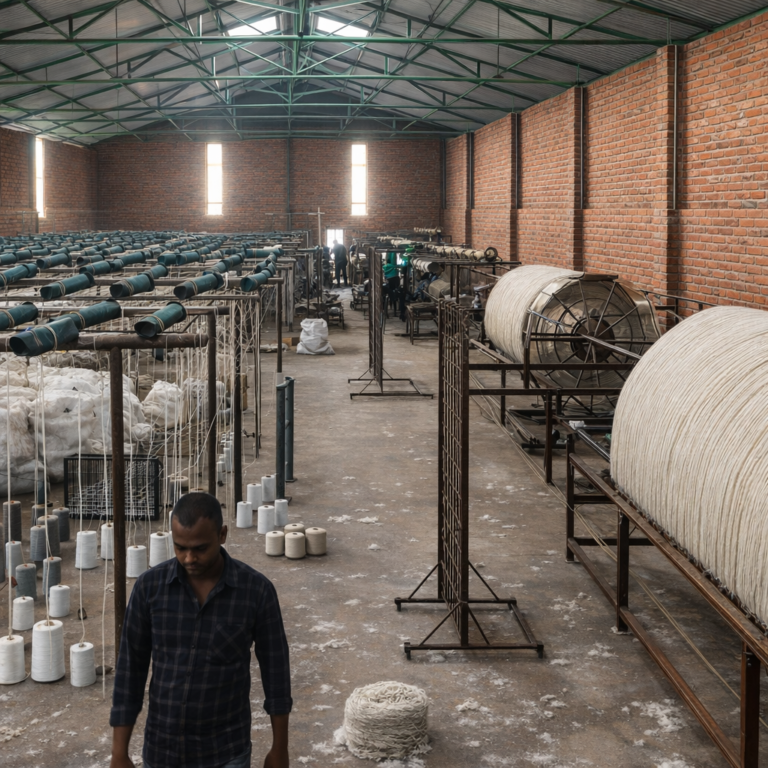
Ask where the looms are, who manages the weavers, and whether dyeing and finishing are in-house or contracted out. A manufacturer that supervises the loom can send real progress updates and fix problems mid-weave; an agent passing orders to unknown subcontractors usually cannot. Visit if you can, or ask for a live video walk-through. Founder-led workshops where the owners came up as weavers, as described in our story, tend to answer these questions directly.
2. Test their technical vocabulary
A capable supplier will talk easily about KPSI, knot type, pile height in millimeters, wool origin, dye lots, washing and shearing. Vague answers such as “very high quality, very fine” are a warning sign.
3. Check documentation and export experience
Ask for redacted sample invoices and packing lists, and confirm they have shipped to the US before. A supplier who knows US labeling and marking rules saves your broker time.
4. Ask about certifications
US buyers increasingly need documented proof of labor practices. Useful credentials include:
- GoodWeave: a certification program focused on keeping child, forced and bonded labor out of rug supply chains, with labeled, traceable rugs.
- Care & Fair: an industry initiative against illegal child labor in the handmade carpet trade that funds social programs in weaving regions.
- ISO 9001: a quality management system standard. It certifies process, not rug design or knot count.
- CEPC membership: registration with the Carpet Export Promotion Council, the Indian government body that supports carpet exporters.
Always ask for a copy of the certificate and check its scope and validity date. Shahar Rugs International, for example, lists GoodWeave, ISO 9001-2015, CEPC membership, the V Trust Certificate and Care & Fair on its website, and those are the documents a buyer should request and verify from any supplier.
Samples, CAD maps and strike-offs
CAD and the weaving map
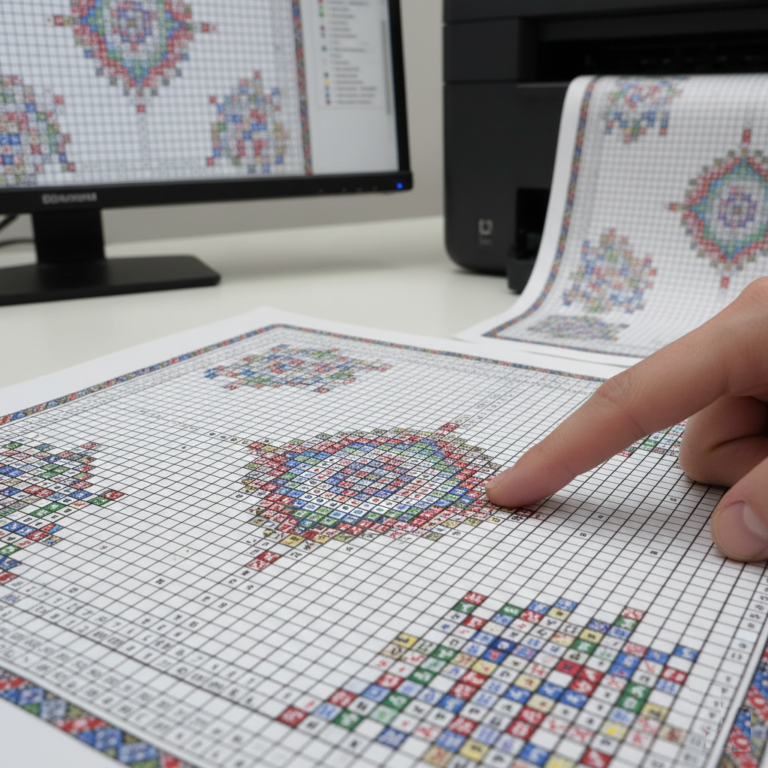
Whether you send your own artwork or choose from a catalogue, the manufacturer should produce a CAD file and a weaving map (traditionally called a naqsha), where each square stands for one knot in a specific color. Check scale, border proportions and color count before approving it, because the weaver follows the map exactly.
Color standards and poms
Give color references in a shared system rather than screen colors. Many Indian manufacturers work with the ARS/ARRS wool color system and Pantone references. Ask for physical yarn poms dyed from the actual production wool, and view them under daylight and under the lighting your end client will use.
Strike-offs and full samples
A strike-off is a small woven section that shows color, texture and pile height, and it is cheap insurance on any new design. For a large program, consider a full-size first piece. Keep one approved sample as your “golden sample” and reference it in the purchase order.
You can see how these stages fit into the full production cycle in our step-by-step guide to how a rug is made.
What to put in the purchase order
At minimum, the PO should specify:
- Construction and knot type (for example, Persian knot or Tibetan knot)
- KPSI or the supplier’s local quality grade, converted to KPSI
- Pile material and origin (for example, New Zealand wool or Indian wool), plus foundation material
- Pile height after shearing, in millimeters
- Finished size and accepted tolerance
- Color references and approved sample ID
- Finishing: wash type, edge binding, fringe or no fringe
- Labeling: fiber content, country of origin, care instructions, your brand label if private label
- Packing method and shipping marks
- Delivery date, Incoterm and penalties or remedies for delay or defects
Quality checks before shipment
Build in at least three checkpoints before the rugs reach your warehouse:
- On the loom: request photos or video at roughly one-third and two-thirds completion, with a tape measure in frame.
- After finishing: check size, squareness, pile height, color against the approved sample, and that the back shows the agreed knot density.
- Pre-shipment: for large orders, many importers hire an independent inspection company to audit a sample of pieces against the PO before the final payment is released.
Payment terms
Terms vary with order size and history. Common patterns are a wire-transfer (T/T) deposit at order confirmation with the balance before shipment or against shipping documents, or a letter of credit for larger first orders; samples are often paid by card. Tie the final payment to a documented quality check.
Incoterms: FOB, CIF or DDP
The Incoterm decides where the supplier’s responsibility ends and yours begins.
| Term | Seller handles | Buyer handles | Good fit for |
|---|---|---|---|
| FOB (Free On Board) | Export clearance and loading onto the vessel at the Indian port | Ocean freight, insurance, ISF, US customs entry, duty, delivery | Importers with their own forwarder and broker |
| CIF (Cost, Insurance and Freight) | Above, plus ocean freight and minimum insurance to the US port | US customs entry, duty, port charges, inland delivery | Buyers who want the supplier’s freight rate but their own clearance |
| DDP (Delivered Duty Paid) | Everything to your door, including import clearance and duties | Unloading at destination | Designers, smaller retailers and project buyers who want one landed price |
Two cautions. First, under Incoterms 2020, FOB and CIF are meant for sea and inland waterway transport; for containerized cargo many forwarders recommend FCA or CIP instead, so ask your forwarder which suits you. Second, with DDP, confirm in writing who acts as the importer of record in the US, because that party carries legal responsibility for the entry. Manufacturers that offer door-to-door service, such as our contract manufacturing program, should be able to explain exactly how they handle this.
US customs basics for rug importers
This is a summary, not legal advice; use a licensed US customs broker for every new product line.
- Classification: rugs fall under HTS chapter 57. Heading 5701 covers knotted carpets, 5702 covers woven rugs including hand-woven kilims and dhurries, and 5703 covers tufted carpets. Fiber content also affects the subheading.
- Duty: the base duty rate depends on the classification, and additional tariffs on goods from India have changed several times since 2025. Check the current HTS rate for your classification, plus any additional duties in effect on your entry date.
- ISF (10+2): for ocean shipments, the Importer Security Filing must reach CBP at least 24 hours before the cargo is loaded at the foreign port. Late or missing filings can lead to penalties.
- Entry and bond: commercial shipments above the informal entry limit need a formal entry and a customs bond.
- Marking and labeling: rugs need country-of-origin marking, and textile floor coverings are subject to FTC fiber content labeling rules.
- Flammability: carpets and rugs sold in the US must meet CPSC surface flammability standards (16 CFR 1630 for large rugs, 16 CFR 1631 for small rugs), and importers certify compliance.
- Forced labor: CBP can detain goods it suspects were made with forced labor, so keep supply chain and certification documents ready.
Realistic lead times
Hand-knotting cannot be rushed the way machine production can. As a guide, a manufacturer in Bhadohi may quote 2 to 6 months for a standard 9×12 hand-knotted rug depending on knot density, while hand-tufted, handloom and flat-weave pieces take weeks rather than months. Add sampling time before production and shipping time after. Air freight by express couriers usually takes about 5 to 10 business days; sea freight to the US typically takes 30 to 45 days plus customs and inland delivery.
Frequently asked questions
Can I order a single custom hand-knotted rug, or do I need a minimum order?
It depends on the manufacturer. Some require a minimum per design or color, while others, including Shahar Rugs, will make single custom pieces for bespoke orders, with wholesale minimums that vary by technique.
How do I check that a supplier’s GoodWeave or ISO certificate is genuine?
Ask for a copy of the certificate, note the company name, scope and expiry date, and confirm it with the issuing body. Certification programs generally list or confirm licensed participants on request.
Which Incoterm is best for a first order from India?
If you do not yet have a US customs broker and forwarder, DDP gives you one landed price and the least paperwork. If you already import regularly, FOB or FCA gives you more control over freight cost and timing.
What is the HTS code for hand-knotted wool rugs?
Hand-knotted rugs are classified under heading 5701 of HTS chapter 57, with the subheading depending mainly on fiber content. Have your customs broker confirm the full code and check the current duty and any additional tariffs before you price the product.
How long does a hand-knotted rug order take from India to the US?
Allow for sampling, then production of roughly 2 to 6 months for a 9×12 depending on knot density, then about 5 to 10 business days by air or 30 to 45 days by sea, plus customs clearance and inland delivery.
Start your sourcing conversation
If you are planning a hand-knotted collection or a first trial order from India, send us your design, sizes, target quality and destination through our contact page. Our team will review the specifications and come back with a quote and a suggested sampling plan.