Key takeaways
- Hospitality rugs are specified for traffic, cleaning and code compliance first, and for appearance second.
- Fire performance requirements vary by jurisdiction, occupancy and project; confirm them with the design team and the authority having jurisdiction before sampling.
- Construction choice (hand-tufted, hand-knotted, handloom or flat weave) sets cost, lead time and how the rug wears in a lobby or corridor.
- Lock color with physical poms and strike-offs, and control dye lots across every room type.
- Plan phased production and delivery around the hotel’s opening or renovation schedule, and agree who handles import clearance.
A hotel lobby rug may see more foot traffic in a month than a living room rug sees in years. It has to look right in renderings, survive luggage wheels and daily vacuuming, satisfy fire and life-safety reviews, and arrive in time for an opening date that will not move. Custom handmade rugs can meet all of those demands, provided the project is specified and managed like the contract product it is. This guide explains how contract rug manufacturing works for hotels, resorts, restaurants and other hospitality projects, from the first spec sheet to delivery on site.
Who is involved, and what each party needs
Hospitality rug projects usually involve an interior design firm, a purchasing agent or FF&E procurement company, the owner or brand, and the manufacturer. The designer owns the look and the specification. The purchasing agent owns budget, scheduling and logistics. The brand may have its own standards for flooring and fire performance. A manufacturer that understands this structure will send the right documents to the right person: CAD and strike-offs to the designer, timelines and freight terms to procurement, and test reports to whoever is assembling the code submittal.
Start with the spec: performance before pattern
Traffic level by area
Map every rug to its location and expected use. A guest-room rug beside the bed, a suite living area, a restaurant floor under chairs, a ballroom prefunction space and a main lobby route all wear differently. Heavier traffic calls for a denser pile, a lower pile height and tighter construction. Rugs under dining chairs need a surface that resists crushing and allows chairs to move.
Construction options
- Hand-tufted: the most common choice for custom hotel rugs. It handles complex patterns, logos and carved high-low effects, and production is measured in weeks. See our hand-tufted rugs.
- Hand-knotted: the most durable and the slowest. Best for signature pieces in lobbies, executive lounges and presidential suites where the budget and schedule allow.
- Handloom: loop, cut and combined pile textures with a quieter, tone-on-tone look, well suited to large commercial floors and guest corridors. See our handloom carpets.
- Flat weave: thin and pile-free, useful in casual dining, resort villas and spaces where doors must clear the rug. See our flat weave rugs.
Fiber for heavy use
Wool is the usual starting point for hospitality rugs. It is resilient, takes dye well, hides soil better than many fibers and is naturally more resistant to ignition than many synthetics. New Zealand wool is popular for its consistency. Viscose gives a silk-like sheen but marks and crushes easily and does not tolerate water well, so keep it to accents or low-traffic rooms. Silk belongs in display pieces, not walkways. Cotton and jute suit flat weaves and casual settings but stain more readily.
Cleaning and maintenance
Ask the housekeeping or facilities team how rugs will actually be cleaned. A specification that assumes professional low-moisture cleaning will fail if the property uses heavy wet extraction every week. Include care instructions on the label and in the closeout package.
Fire safety and code compliance: a buyer’s checklist
Fire performance is the part of a hospitality rug spec that most often causes late surprises. Requirements are not uniform. They depend on the country, state and city, the occupancy classification, where in the building the rug sits, whether it is treated as a loose furnishing or a floor finish, and the brand’s own standards. The authority having jurisdiction (AHJ), usually the local fire or building official, makes the final call. The list below is a starting point, not a substitute for the project’s code consultant.
- US federal flammability standards: carpets and rugs sold in the US must meet the CPSC surface flammability standards, 16 CFR 1630 for large carpets and rugs and 16 CFR 1631 for small ones. The test is often called the “pill test” and is also published as ASTM D2859. Under 16 CFR 1630, at least seven of eight specimens must pass.
- Radiant panel testing: many US projects, especially for corridors and exit routes, specify floor covering performance under ASTM E648 (also published as NFPA 253), which reports a critical radiant flux and is used to assign Class I or Class II ratings under life-safety codes.
- Smoke density: some specifications also call for smoke density testing such as ASTM E662.
- Brand and project standards: hotel brands, cruise and transport projects, and projects outside the US may have their own test requirements.
- Documentation: confirm which tests are needed, on what construction and fiber, from which accredited lab, and whether the report must be specific to your exact product or may cover a representative construction.
- Treatments: if a fire-retardant treatment is needed to pass, ask how it affects hand, color and cleaning, and whether the result holds after cleaning.
Settle these questions before strike-offs are approved. Changing fiber or backing after sampling to pass a test can reset both the color approval and the schedule.
Color matching across a whole property
Shared color references
Designers usually work from Pantone references or physical swatches. Many Indian manufacturers translate those into the ARS/ARRS wool color system and dye yarn poms for approval. Approve poms under both daylight and the actual lighting planned for the space, because warm hotel lighting can shift colors noticeably.
Dye-lot control
On a hotel job, the same design may repeat across dozens or hundreds of rooms. Ask the manufacturer how they control dye lots so that every rug of a room type matches. Ideally, yarn for each colorway is dyed in as few lots as possible, and the approved pom is kept as the reference for every lot.
Mock-ups, strike-offs and approvals
A typical approval sequence looks like this:
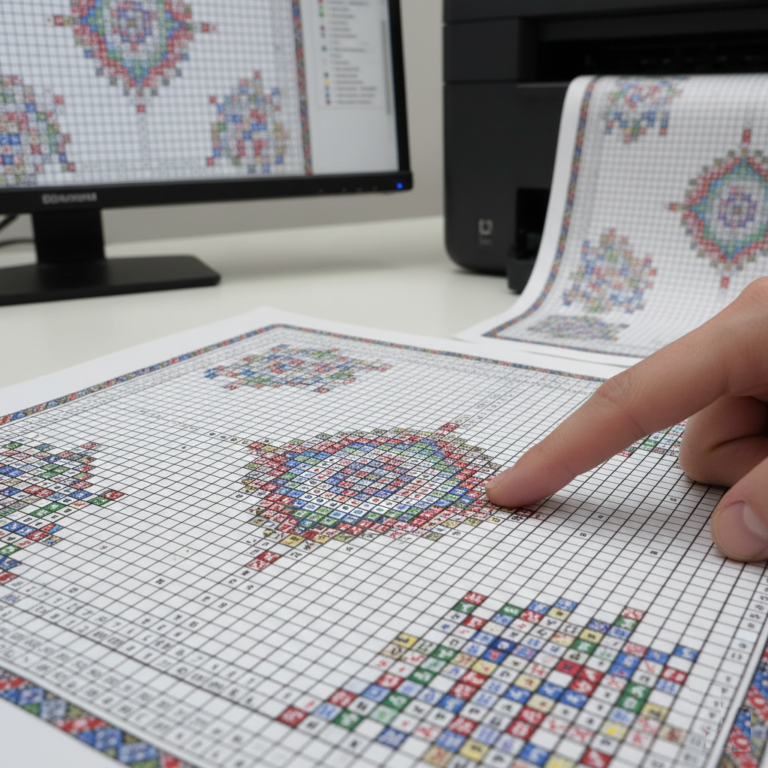
- Design brief and CAD: the designer supplies artwork, sizes, pile heights and materials; the manufacturer returns a CAD weaving map and a budget estimate.
- Yarn poms: physical color approval for every color in the design.
- Strike-off: a woven section showing color, texture, pile height and any carving.
- Mock-up room or first article: on larger projects, a full-size rug is often installed in the model room so the owner and brand can sign off on the real thing.
- Production release: only after the approved sample is documented and referenced in the PO.
Shahar Rugs follows a similar five-step path for contract work, from CAD review and strike-off approval through loom production, finishing and dispatch, as described on our contract manufacturing page.
Scheduling, phased delivery and urgent projects
Build the schedule backward
Start with the date rugs must be on site, then subtract inland delivery, customs clearance, ocean or air transit, finishing, weaving and approvals. As a rough guide, hand-tufted rugs take about 4 to 8 weeks to produce, handloom and flat weaves about 3 to 6 weeks, and a standard 9×12 hand-knotted rug 2 to 6 months depending on knot density, all counted from final approval. Sea freight adds about 30 to 45 days; express air takes about 5 to 10 business days but costs far more for large pieces.
Phased delivery
Renovations often run floor by floor, and new builds open public areas and guest floors at different times. Ask for production to be split into phases that match the installation sequence, with packing lists and labels by floor, room type or area. This reduces site storage and the risk of rugs going to the wrong room.
Speeding up oversized pieces
Large lobby and ballroom rugs are the usual bottleneck. On hand-knotted work, one way to shorten the timeline is to put several weavers on a single wide loom at the same time. Shahar Rugs offers this on contract projects, deploying multiple master weavers on one oversized loom to reduce production time. Discuss it early, because loom width and weaver availability need to be planned.
Logistics, DDP and import responsibility
For international projects, agree the Incoterm in the contract. Under FOB or CIF, the buyer’s forwarder and customs broker take over at a port. Under DDP (Delivered Duty Paid), the manufacturer delivers to the site or warehouse with import clearance and duties included, which gives procurement one landed cost per rug. With DDP, confirm in writing who is the importer of record in the US and who holds the compliance documents, including flammability certificates and country-of-origin labeling. Ocean shipments to the US also need an Importer Security Filing before loading, so the party handling freight must have the shipment data in time.
Quality control and closeout
- Inline checks on pile density, pile height and backing during production
- Final dimensional inspection against an agreed tolerance
- Photo and video updates from the loom for long-lead items
- Labels with project name, room type and rug ID for easy installation
- A closeout file with care instructions, test reports and spare-piece records for future replacement orders
Frequently asked questions
What is the best rug construction for a hotel lobby?
For most lobbies, a dense hand-tufted or hand-knotted wool rug with a moderate pile height performs well. Hand-tufted suits custom patterns on tighter schedules, while hand-knotted offers the longest life when time and budget allow.
Do custom hotel rugs need fire testing?
Rugs sold in the US must meet the CPSC surface flammability standards, and many hospitality projects require additional tests such as ASTM E648 radiant panel or smoke density testing. Exact requirements depend on the jurisdiction, location in the building and brand standards, so confirm them with the project’s code consultant and the local authority.
How do you keep colors consistent across hundreds of guest-room rugs?
Approve physical yarn poms and a strike-off, keep the approved pom as the master reference, and ask the manufacturer to dye each colorway in as few lots as possible with checks against that reference.
Can a large lobby rug be produced faster?
Sometimes. Placing several weavers on one wide loom can shorten weaving time for oversized hand-knotted pieces, and choosing hand-tufted construction shortens it further. Discuss the option before scheduling.
Should a hospitality project buy rugs on DDP terms?
DDP simplifies budgeting and logistics because duty, clearance and delivery are included. It works best when the importer of record and compliance documents are clearly defined in the contract.
Plan your project with a contract manufacturer
If you are specifying rugs for a hotel, resort or restaurant, send us your drawings, room schedule, performance requirements and target dates through our contact page. We will review the brief and return construction recommendations, a sampling plan and a delivered quotation.