Key takeaways
- KPSI (knots per square inch) measures how densely a hand-knotted rug is tied. It is a measure of labor and detail, not a quality grade on its own.
- Higher KPSI allows finer curves and smaller motifs, but it also multiplies weaving time, which drives cost and lead time.
- Persian-knot and Tibetan-knot rugs are counted differently, so compare like with like.
- Verify knot count on the back of the rug by counting across one inch and down one inch, then multiplying.
- Write the KPSI, knot type and counting method into your purchase order, and ask the supplier to convert any local quality grade into KPSI.
Every buyer of hand-knotted rugs eventually runs into the same question: why do two 9×12 rugs in similar colors carry such different prices and delivery dates? Often the biggest single reason is knot density. This article explains what KPSI means, how it is measured, what typical ranges look like, and how to use it when you write specifications for a collection or a project.
What KPSI means
KPSI stands for knots per square inch. In a hand-knotted rug, a weaver ties each knot by hand around warp threads (the vertical threads on the loom), then secures each row with weft threads and beats it down. Count how many knots sit in one square inch of the finished rug and you have the KPSI.
Some markets use knots per square meter or per square decimeter instead. One square inch is about 6.45 square centimeters, so 100 KPSI equals roughly 155,000 knots per square meter. If a supplier quotes in metric, ask for the figure in KPSI so you can compare offers directly.
Why knot density matters
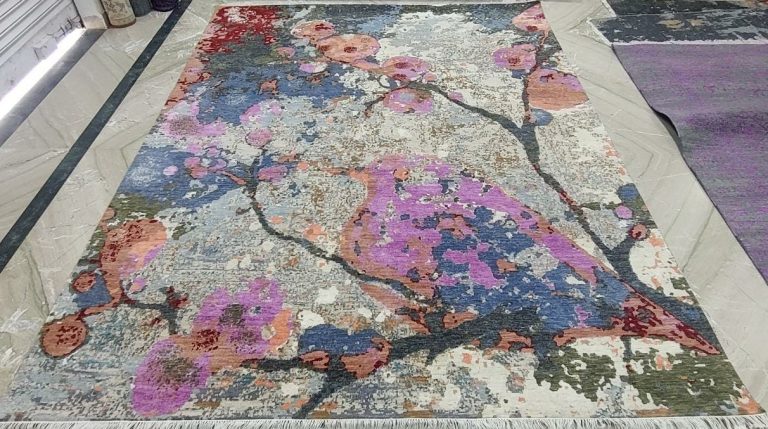
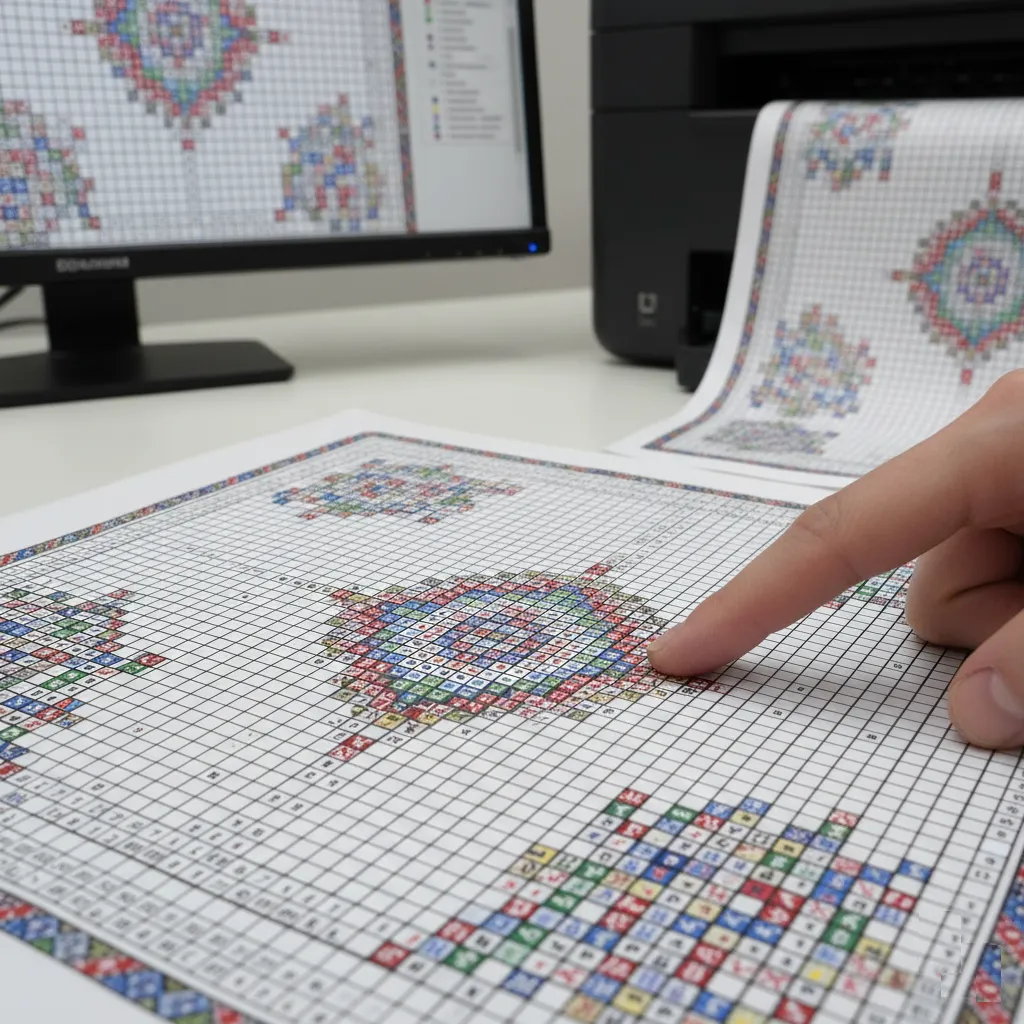
Think of knots as pixels. A rug at low knot density can only draw bold shapes and stepped edges. A dense rug can show smooth curves, thin outlines and small floral detail. That is why fine traditional designs need more knots than a large-scale modern abstract or a tribal geometric.
Typical KPSI ranges
There is no official grading scale, and different dealers draw the lines in different places. The table below shows commonly used ranges for Persian-knot rugs, as a starting point for discussion with your supplier.
| Approximate KPSI | Common description | Where it fits |
|---|---|---|
| Under about 60 | Coarse | Tribal, rustic and bold geometric designs; chunky wool; Oushak-style looks with large motifs |
| About 60 to 130 | Medium to medium-fine | Most commercial transitional and traditional wool rugs |
| About 130 to 250 | Fine | Detailed traditional designs, wool and silk accents |
| Above about 250 | Very fine | Silk-rich or collector-level pieces with intricate drawing |
Treat these as bands, not rules. A well-made 80 KPSI rug in good wool can outlast a poorly washed 150 KPSI rug made with weak yarn.
Persian knot vs Tibetan knot
The type of knot changes how density is described, so it is worth understanding before you compare quotes.
Persian (asymmetric) knot
Also called the Senneh knot, the yarn wraps fully around one warp thread and passes under the next. Because it is asymmetric, it packs tightly and suits detailed drawing. Many traditional and transitional rugs from India use it. The related Turkish or Ghiordes knot is symmetric and wraps both warps.
Tibetan knot
In the Tibetan method, yarn is looped around the warps and over a rod, and the loops are cut when the rod is pulled out. It suits contemporary designs, tone-on-tone color work and thicker, softer piles. Tibetan-knot quality is often quoted with figures such as 60, 80, 100 or 150 “knots”, which suppliers usually describe as a per-square-inch count, but the counting convention is not identical to Persian-knot KPSI.
The practical point: a 100-knot Tibetan rug and a 100 KPSI Persian-knot rug are not automatically equal. Compare Tibetan with Tibetan and Persian with Persian, and ask how the count was made.
Local quality grades in Bhadohi
Suppliers in the Bhadohi region sometimes describe quality with two numbers, such as 9/40 or 10/60, rather than KPSI. These come from a traditional local measuring convention for knots across and rows down over set distances. Published conversion charts differ slightly, but as a rough guide a 9/40 grade works out to around 90 KPSI. Ask your supplier to state the KPSI equivalent in writing alongside any local grade.
How to verify KPSI on the back of a rug
You do not need a lab. You need a ruler, good light and a little patience.
- Turn the rug over. On a hand-knotted rug, the pattern is clearly visible on the back, and you will see rows of small knot nodes.
- Lay a ruler along the width (across the warps) and count the knots in one inch. This is the horizontal count.
- Lay the ruler along the length and count the rows of knots in one inch. This is the vertical count.
- Multiply the two numbers. Ten knots across and ten rows down gives 100 KPSI.
- Repeat in two or three places, such as the field and near a border, and average the results.
Two cautions. First, on many rugs each knot shows as two small bumps on the back, one for each warp it wraps, so counting bumps instead of knots can double your horizontal figure. Second, horizontal and vertical counts are rarely identical; rugs are often a little denser in one direction. A magnifying glass or a knot-counting gauge makes the job easier, and a photo of the back with a ruler in frame is a useful record for your files.
Signs a rug is not hand-knotted
If the back is covered with a glued cloth or a latex layer, it is almost certainly hand-tufted, not hand-knotted. If the back pattern is perfectly uniform with no small irregularities at all, ask more questions. Fringe on a hand-knotted rug is normally the end of the warp threads; a fringe sewn on afterward suggests another construction. Tufted rugs are a legitimate product with real advantages; see our hand-tufted rugs page. They should simply be sold and priced as tufted.
How KPSI drives price and lead time
The arithmetic
A 9×12 rug is 108 square feet, or 15,552 square inches. Multiply by knot density:
- At 60 KPSI: about 933,000 knots
- At 100 KPSI: about 1.56 million knots
- At 150 KPSI: about 2.33 million knots
Every one of those knots is tied by hand. Moving from 60 to 150 KPSI means two and a half times as many knots in the same rug, and weaving labor rises roughly in step. Fine yarn, more colors and complex drawing slow the weaver further.
What that means for delivery dates
This is why lead times for hand-knotted rugs are quoted as ranges. A Bhadohi manufacturer such as Shahar Rugs quotes 2 to 6 months for a standard 9×12 hand-knotted rug, with knot density as the main variable. Size, design complexity and the number of weavers working on the loom also matter. Add time for design approval and sampling before weaving starts, and for washing, shearing, stretching and binding after the rug comes off the loom. Those steps are explained in the journey of a rug.
Price is not only knots
KPSI is the biggest labor input, but other factors move price too:
- Fiber: silk and bamboo silk cost more than wool; New Zealand wool, Ghazni wool and Bikaner wool differ in hand, luster and price.
- Pile height: a thicker pile uses more yarn per square inch.
- Color count and dyeing: more colors mean more dye lots and more yarn changes on the loom.
- Finishing: special washes, carving and hand-binding add steps.
How to specify KPSI as a trade buyer
Match density to design
Do not overspecify. A large-scale abstract with broad color fields does not need 150 KPSI, and paying for it adds months without a visible benefit. A fine floral or a design with thin lines may look blurred below about 100 KPSI. Ask the manufacturer to recommend a density for your artwork and to show a strike-off at that density.
Match density to use
For residential retail, the right density is often the lowest one that renders the design cleanly at a price your customers accept. For executive suites and statement pieces, buyers may choose a finer weave for appearance. For hard-wearing areas, fiber quality, pile height and correct finishing often matter more than pushing knot count higher.
Put it in writing
Your purchase order or tech pack should state:
- Knot type (Persian or Tibetan)
- Target KPSI, with an accepted minimum
- How KPSI will be counted (knots, not bumps; average of three locations)
- Pile material, pile height in millimeters and foundation material
- The approved strike-off or sample ID
Then check it at the loom-photo stage and again on arrival. Our hand-knotted rug collections include fine weaves with high KPSI as well as bolder tribal and rustic weaves, which makes it easier to see the difference side by side.
Frequently asked questions
Is a higher KPSI always better?
No. Higher KPSI means more detail and more labor, but durability also depends on wool quality, pile height and finishing. Choose the density your design needs rather than the highest one available.
What KPSI is good for a commercial-grade hand-knotted wool rug?
Many commercial wool rugs fall in roughly the 60 to 130 KPSI range. The right figure depends on how detailed the design is and the look you want; ask for a strike-off before committing.
How do I convert a Bhadohi quality grade such as 9/40 into KPSI?
Local grades use a traditional counting convention, and conversion charts vary slightly. As a rough guide, 9/40 is about 90 KPSI. Ask the supplier to state the KPSI equivalent in the quotation.
Can I measure KPSI on a hand-tufted rug?
No. Hand-tufted rugs are not knotted, so they have no knot count. Their density is usually described by pile weight or GSM, pile height and stitch rate instead.
Does a higher knot count make a rug take longer to produce?
Yes. A 9×12 at 150 KPSI has about 2.5 times as many knots as one at 60 KPSI, and each knot is tied by hand, so weaving time rises sharply as density increases.
Get a knot-count recommendation for your design
Share your artwork, sizes and target price range through our contact page, and we will suggest a knot type and KPSI that render the design cleanly, along with a realistic production timeline.