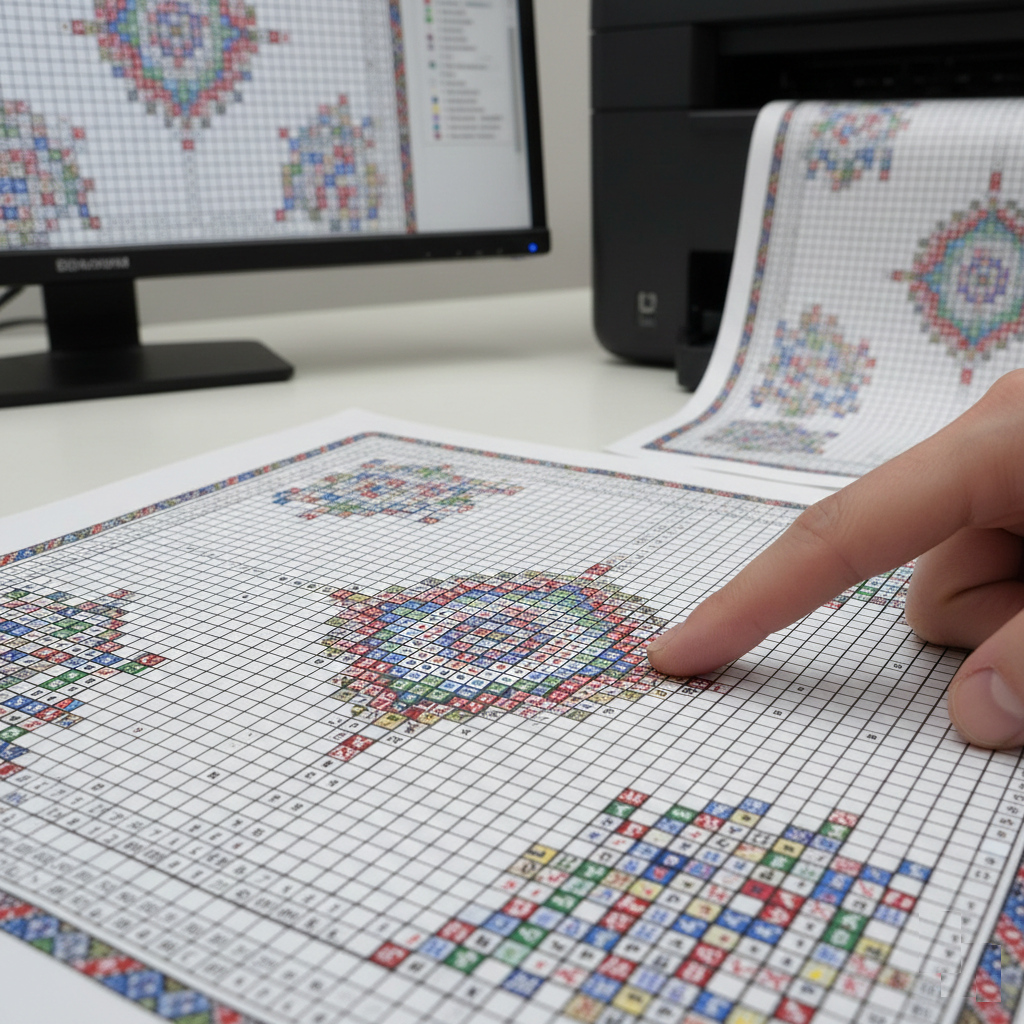
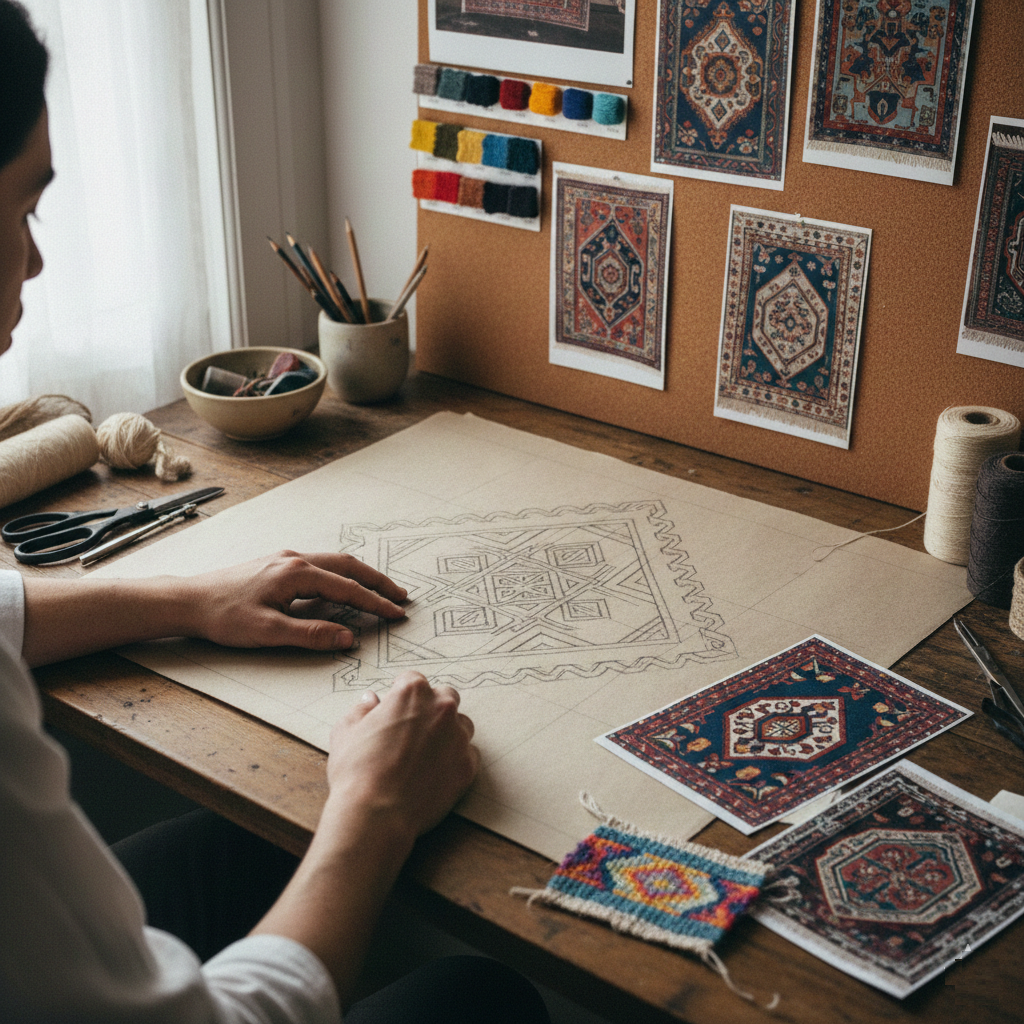
Design Creation: Where Art Meets Blueprint
Every Shahar Rug begins as an artistic vision, meticulously translated into a detailed blueprint for our weavers. Our designers draw inspiration from rich Indian heritage, Persian motifs, contemporary art, and client visions. Initial concepts are hand-sketched, exploring intricate patterns, motifs, and borders that will define the rug's character.
Raw Materials: From Fiber to Yarn
The soul of every rug lies in its fibers. We select only the finest raw materials to guarantee the beauty, durability, and luxurious feel of our carpets.
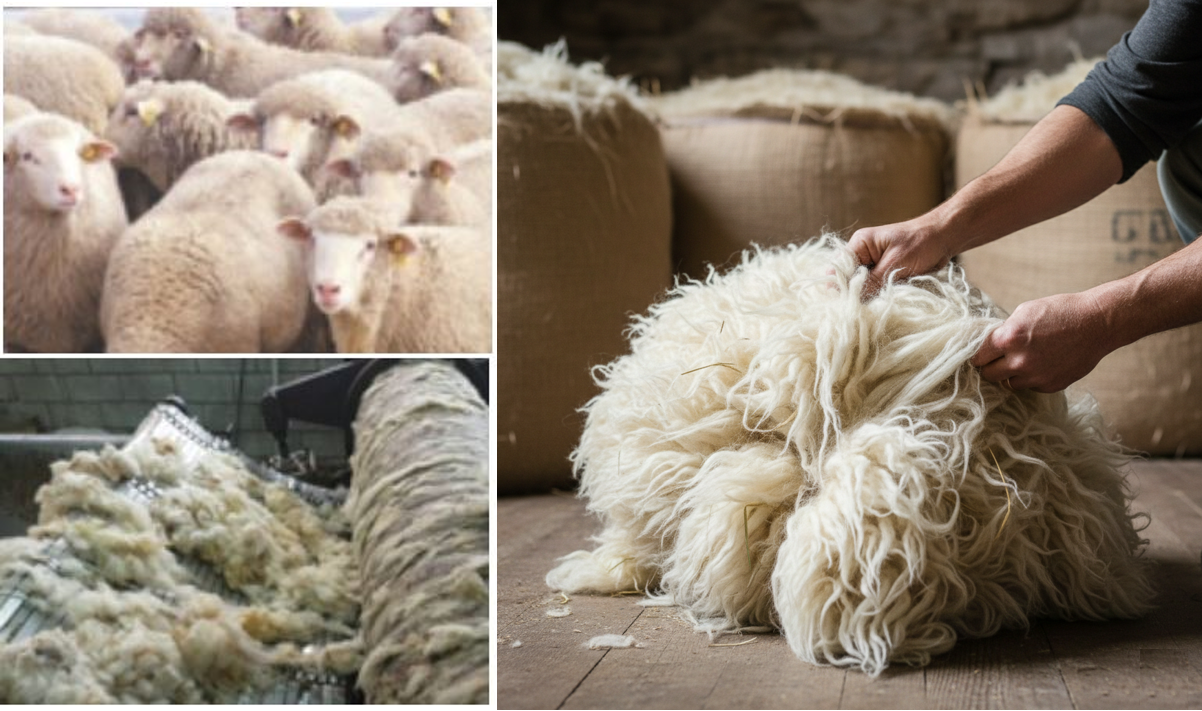
We primarily source premium natural wool, renowned for its strength, resilience, and natural luster. Our experts meticulously inspect each batch to ensure it meets our stringent standards for fiber length, crimp, and cleanliness, providing a superior foundation for our rugs.
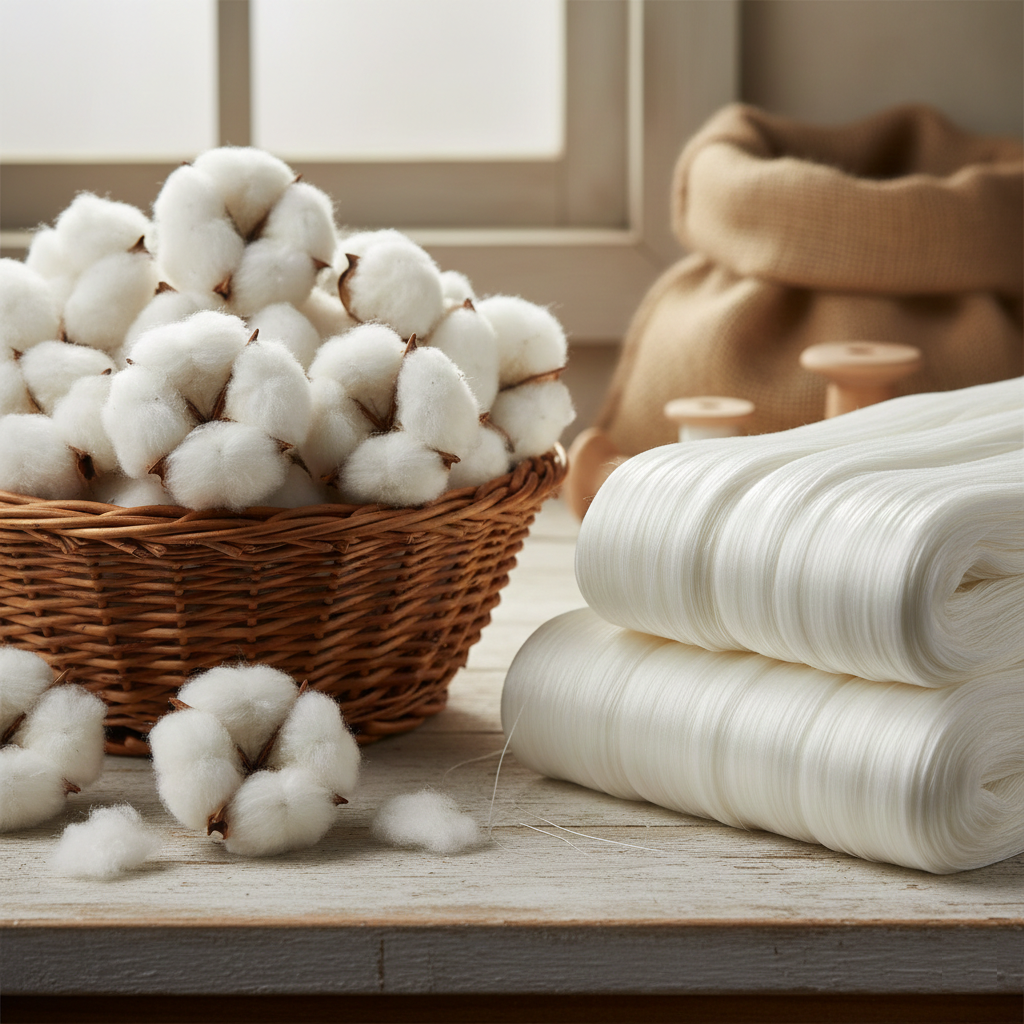
For specific designs and textures, we incorporate high-grade cotton, prized for its softness and strength in the foundation, and lustrous viscose, which imparts a silk-like sheen and drape, adding depth and elegance to certain collections.
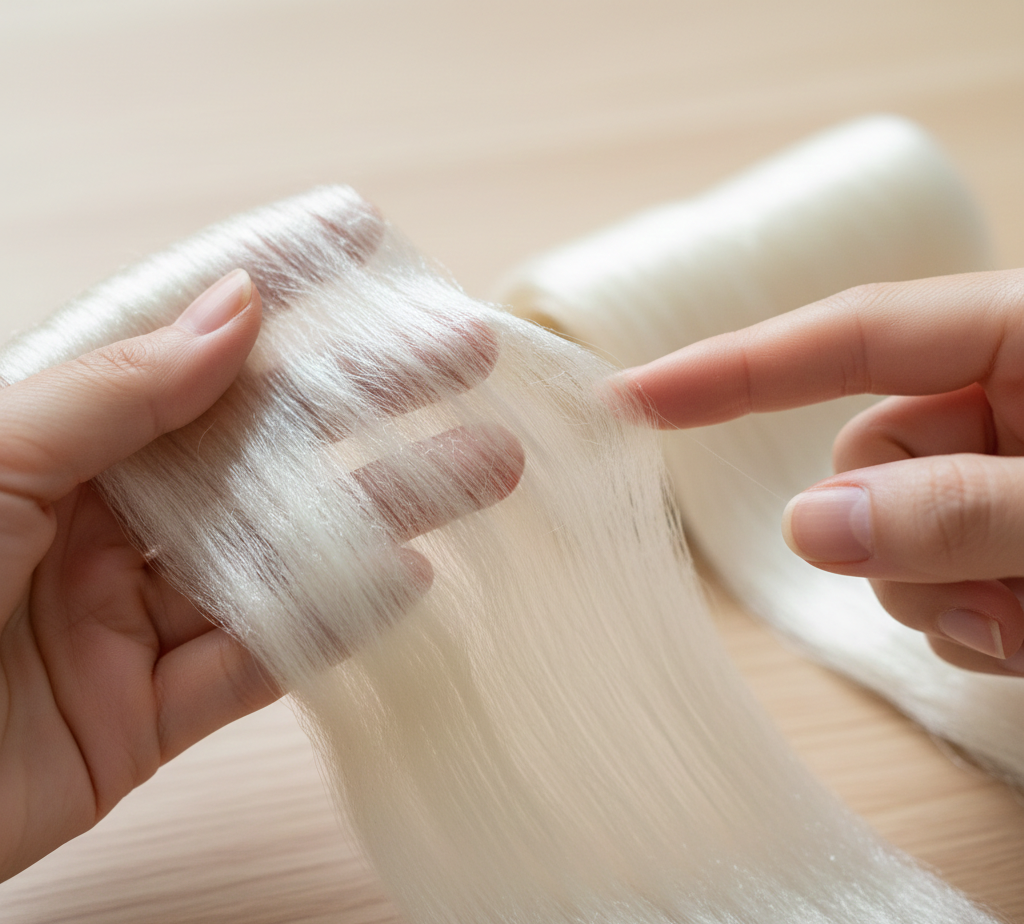
For our most luxurious creations, we use pure Indian silk, known for its exquisite softness, unparalleled sheen, and incredible strength. It's often used to highlight intricate patterns, creating a mesmerizing play of light and shadow.
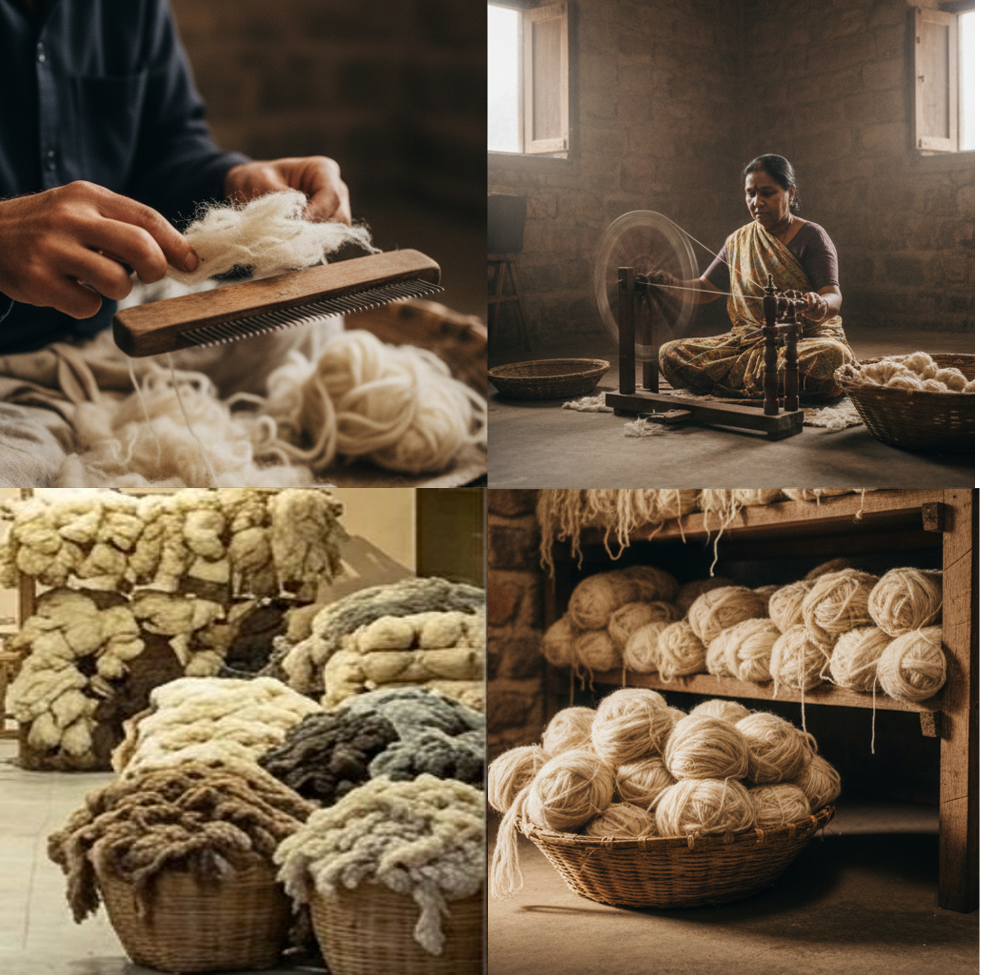
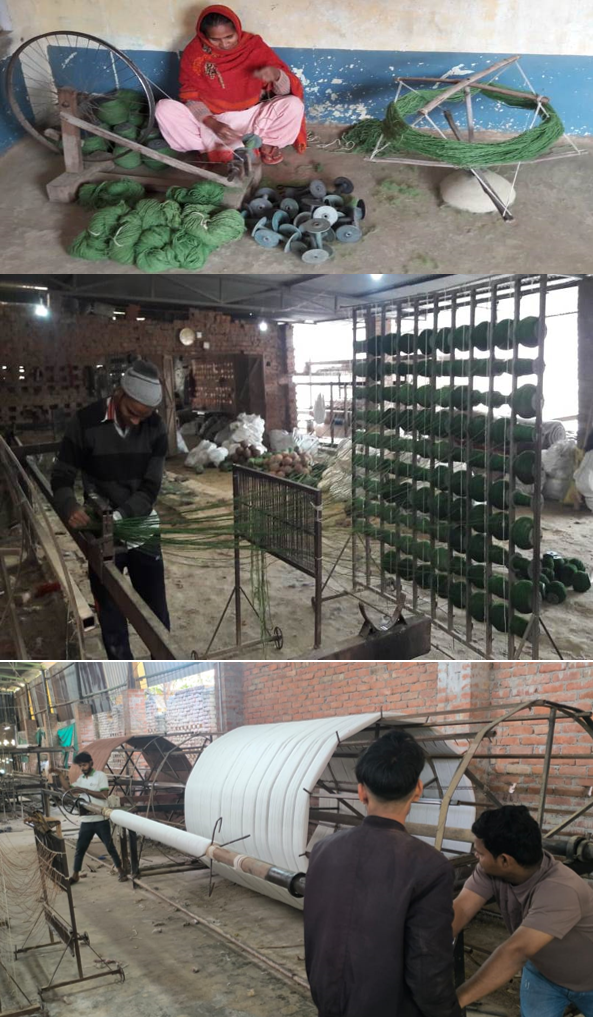
Once sorted, the raw fibers undergo a meticulous carding process to clean, disentangle, and align them. Following this, skilled artisans spin the fibers into robust and consistent yarn. This hand-spinning ensures the yarn's integrity and unique texture, a crucial step before dyeing.
Dyeing: Infusing Life with Color
The quality of our dyes and the expertise of our dyers are paramount in bringing our designs to vibrant life.
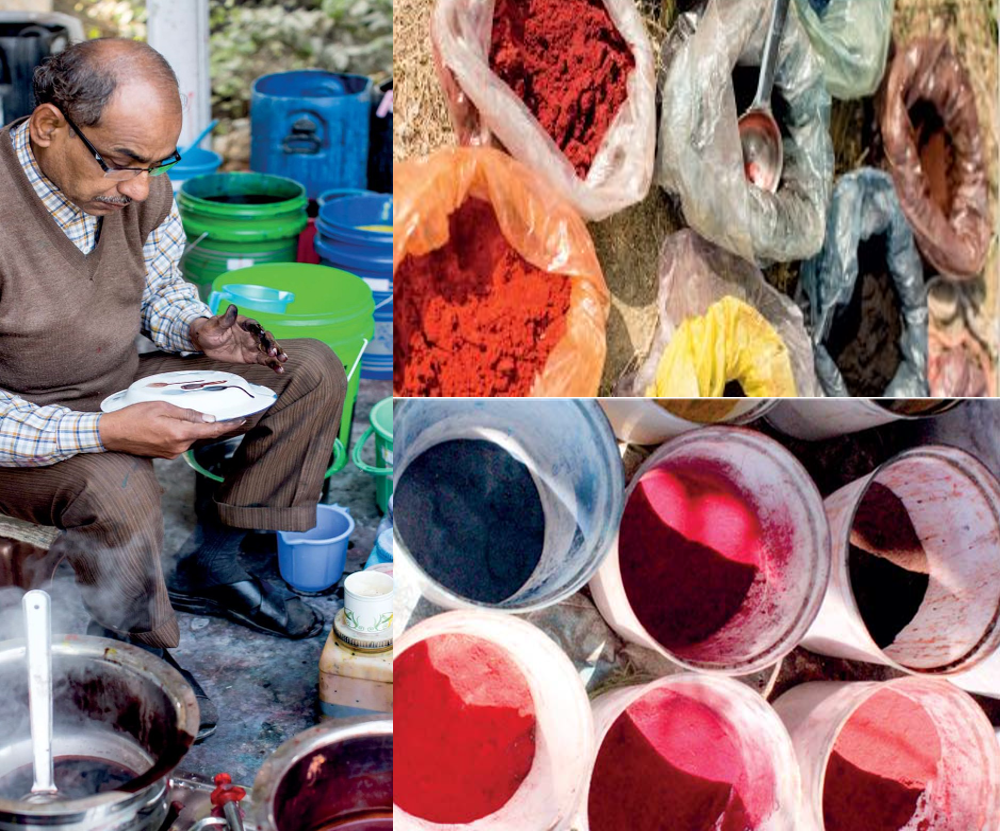
Masters of Color
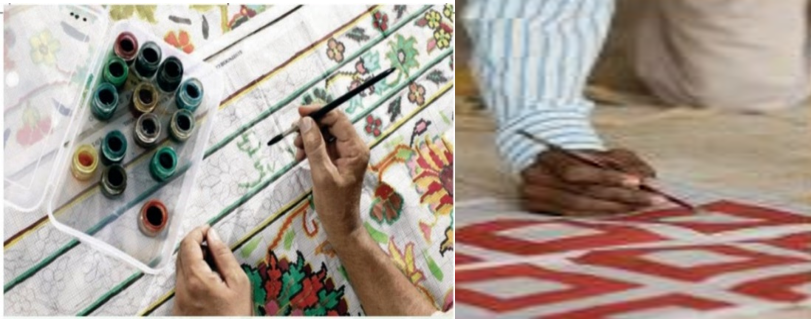
Based on the naqsha, specific dye recipes are prepared. Our dyers are masters of color, blending pigments to achieve the exact shades required, from deep indigos to vibrant reds and subtle pastels. We prioritize eco-friendly and natural dyes wherever possible.
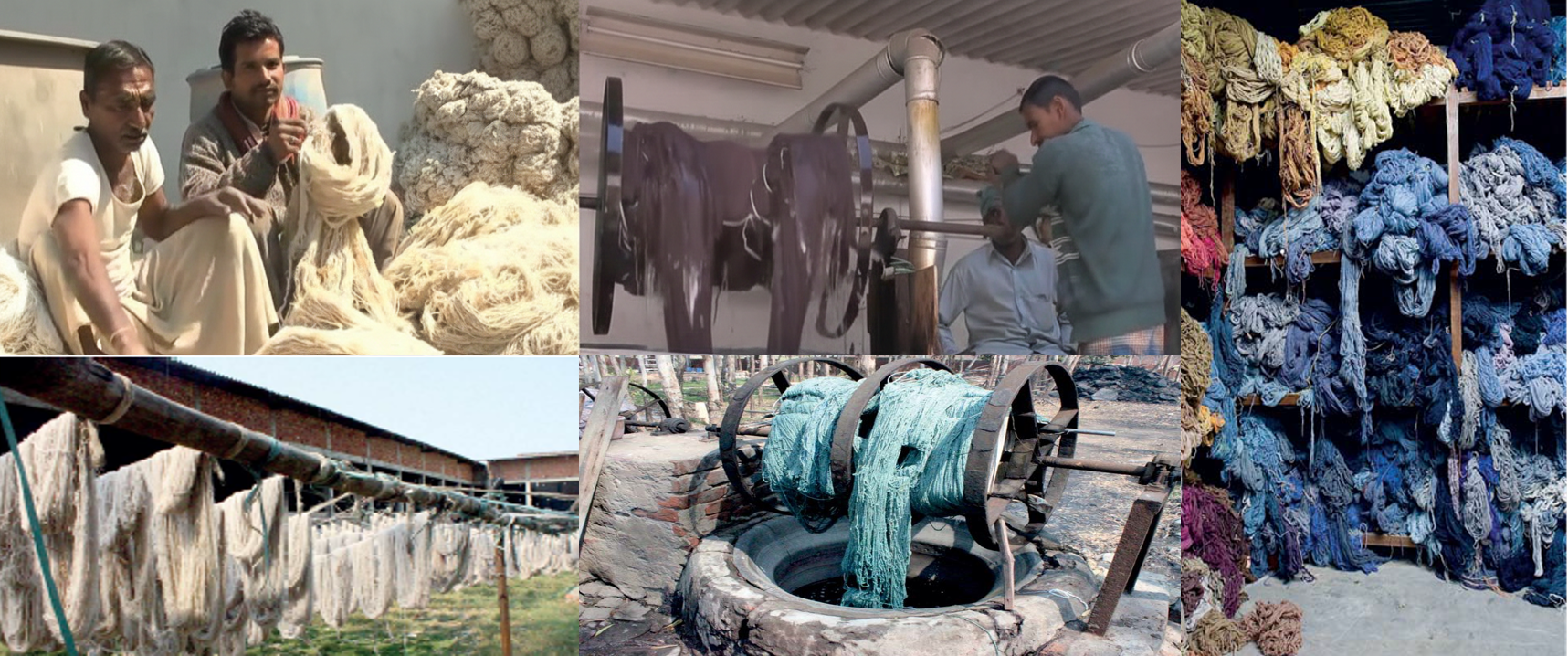
The Artisanal Process
The spun yarn is then meticulously dyed in large vats. This process requires precise temperature control and timing to ensure uniform color absorption and vibrancy. After dyeing, the yarn is thoroughly rinsed to remove excess dye and then carefully dried, often under natural sunlight, to lock in the colors.
Weaving Techniques: The Heart of the Craft
This is where the magic happens – skilled hands transform colored yarn into intricate patterns, one knot or loop at a time.
Hand-Knotted (The Heirloom Technique)
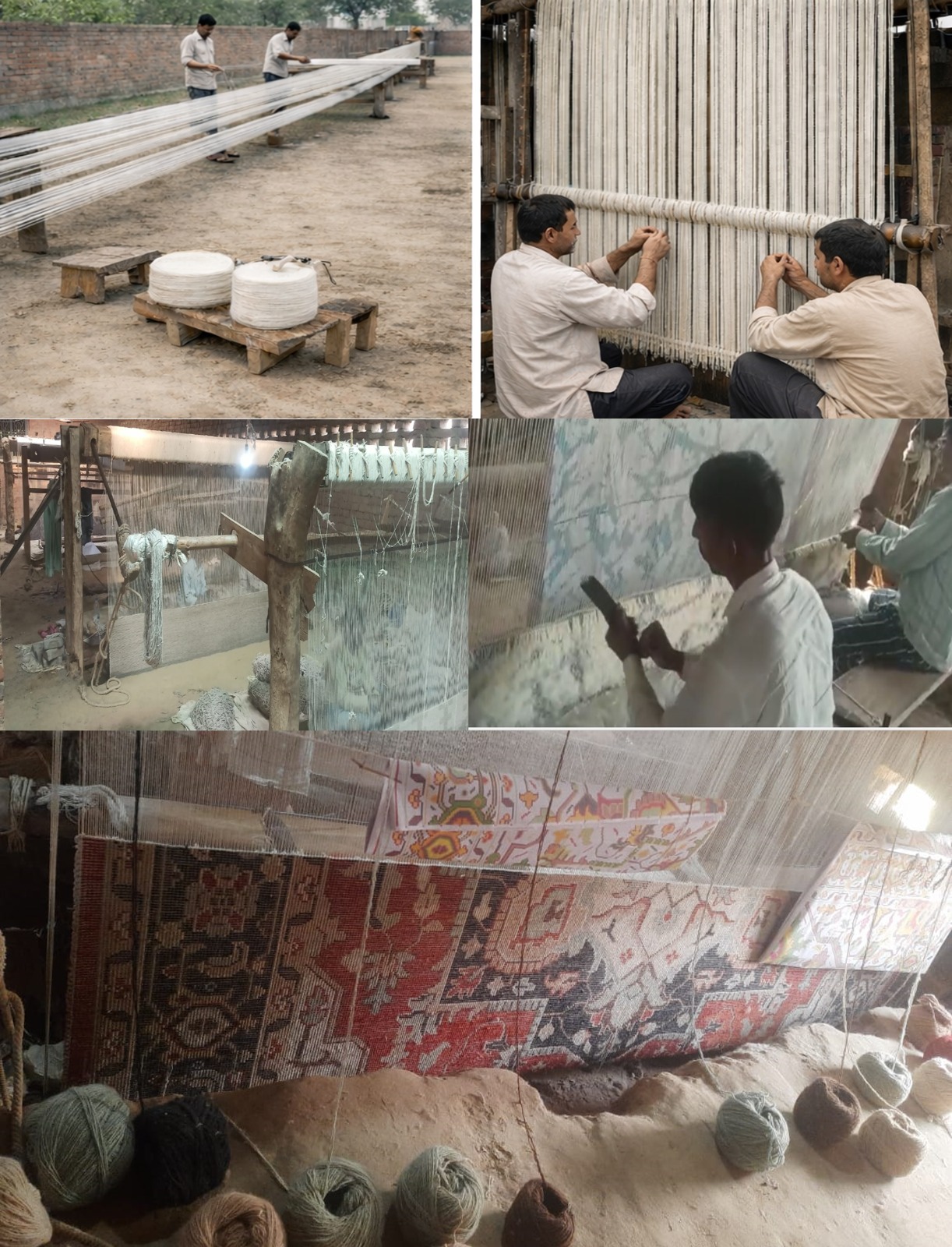
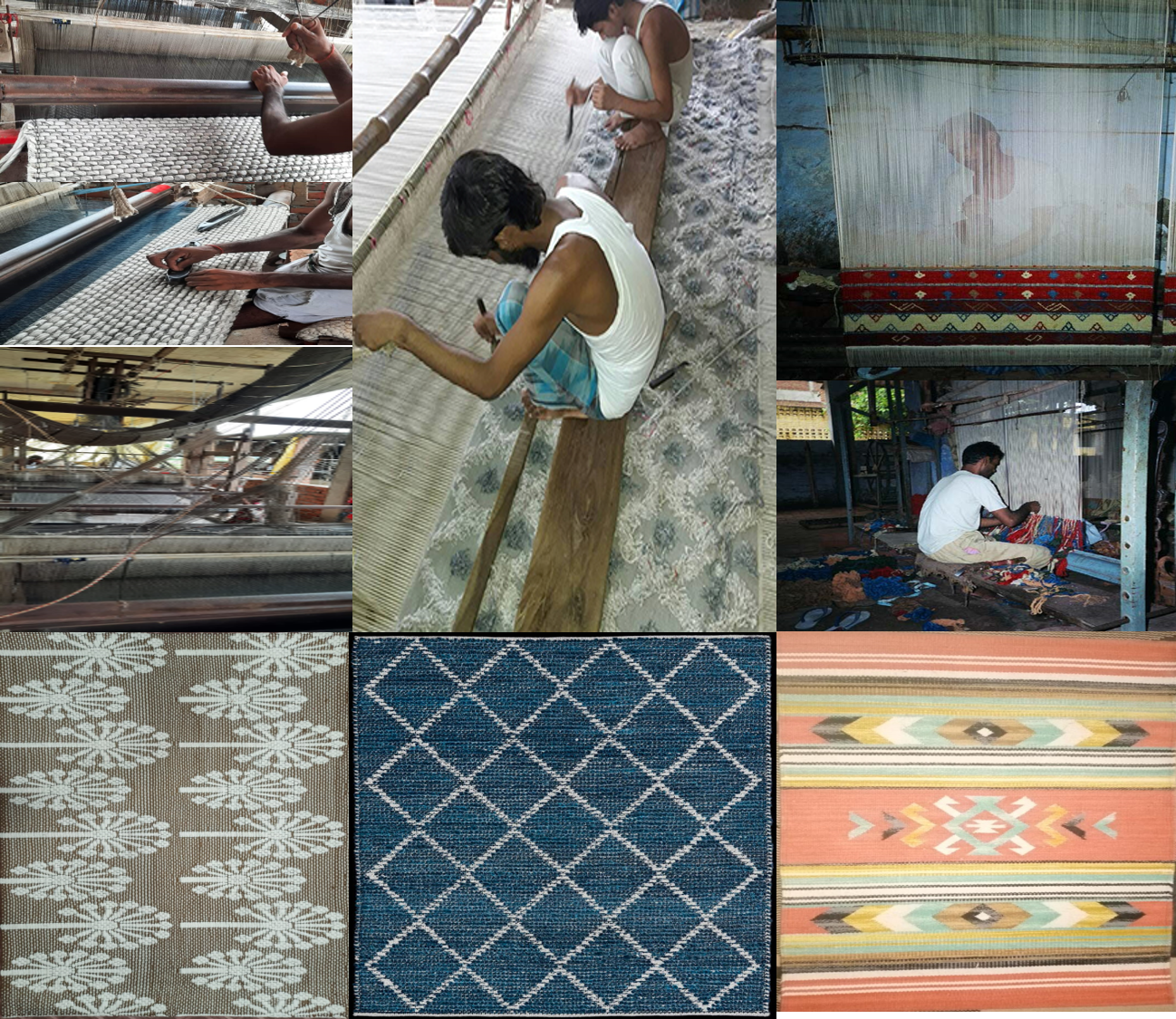
The loom, typically made of wood, is precisely set up with strong cotton or silk vertical threads (warp) under immense tension. The naqsha is placed below or beside the loom as the weaver's guide.
Following the naqsha, our skilled weavers painstakingly tie individual knots of wool or silk yarn around two warp threads. Each row of knots is then secured by one or more horizontal weft threads, which are tightly beaten down using a heavy metal comb. This intricate process is what gives hand-knotted rugs their incredible durability and intricate detail. A single rug can contain hundreds of thousands, even millions, of knots.
Hand-Tufted (Versatile & Plush)
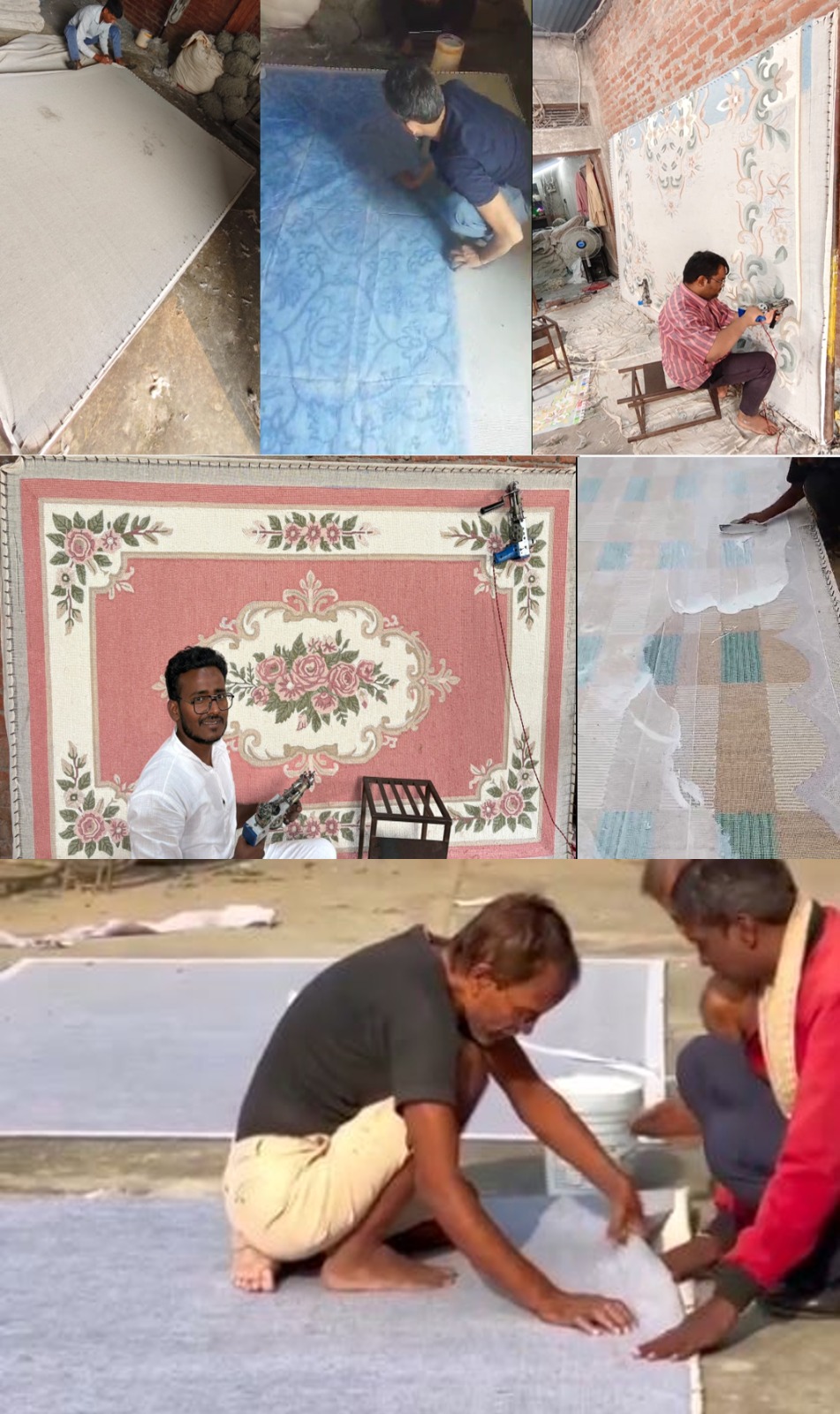
The chosen design is precisely stenciled onto a primary backing fabric, which is stretched securely on a frame. Using a specialized hand-operated tufting gun, artisans punch individual loops of yarn through the backing fabric, following the stenciled pattern. This creates a dense, plush pile on the front side of the rug. This method allows for greater design flexibility and quicker production compared to hand-knotting.
Once the tufting is complete, a layer of latex adhesive is carefully applied to the back of the rug to lock all the yarn loops in place. A secondary, protective fabric backing is then firmly pressed onto the latex, providing additional stability and a clean finish.
Handloom (with Pile: Loop, Cut, or Combination)
This specialized handloom technique combines the strength of a mixed-fiber warp with precise weaving to create rugs with luxurious pile textures, either with or without a canvas backing for added versatility.
Yarn Preparation & Blending for Warp
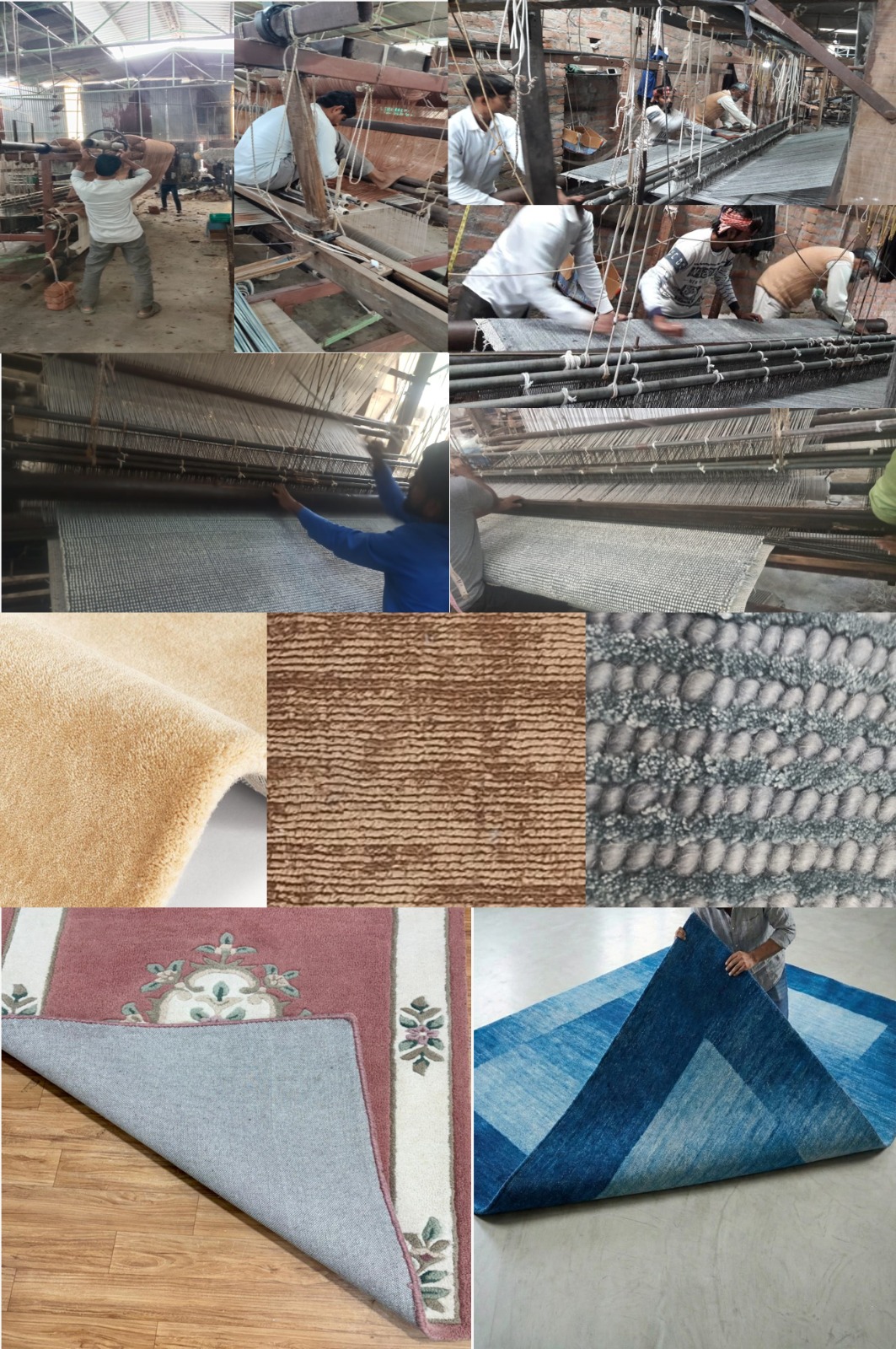
Unlike flat weaves, this technique begins with a unique warp preparation. Horizontal warp threads are set up using a combination of wool, silk, or viscose running in parallel, interspersed with cotton warp threads. This thoughtful blend provides both durability and the desired surface texture when woven.
Loom Setup & Design Transfer
Our specialized handlooms are set up horizontally, allowing the weaver optimal access to the warp. The intricate design blueprint (naqsha) is positioned for constant reference, guiding every pass of the weft and formation of the pile.
The Weaving Process (Forming the Pile)
This is the defining step. The weaver uses a shuttle to pass only cotton weft threads horizontally across the mixed-fiber warp. As the cotton weft is woven in, the weaver meticulously introduces additional threads (often wool/silk/viscose) to create the pile. This is done by:
Loop Pile: Creating consistent loops of yarn over metal rods which are then carefully withdrawn, leaving intact loops.
Cut Pile: Creating loops over rods, but then slicing the top of these loops with a sharp tool as the rod is withdrawn, resulting in a plush, cut-pile surface.
Combination Pile: Alternating between loop and cut pile techniques to create varied textures and depths within the same rug, adding sophisticated design elements.
Each pass of the weft and formation of the pile is tightly beaten with a comb to ensure density and durability.
Backing Option: With or Without Canvas
Without Back Canvas (Reversible & Flexible): For designs that require greater flexibility, a softer drape, or even reversibility, the rug is woven directly without an additional back canvas. The tight construction of the cotton weft securely locks the pile in place.
With Back Canvas (Added Stability & Structure): Once the weaving is complete, a layer of latex adhesive is carefully applied to the back of the rug to lock all the yarn loops in place. A secondary, protective fabric backing is then firmly pressed onto the latex, providing additional stability and a clean finish.
Flat Weave / Hand Woven
Dhurries are flat-woven rugs, characterized by the absence of a pile. The design is created entirely by the intricate interlacing of colored weft threads around the warp threads. The weft threads are skillfully interwoven and then turned back at the edge of each color block, creating a seamless, reversible pattern. This technique is often used for bold geometric or striped designs.
Finishing Process: The Final Transformation
Once woven, each rug undergoes a series of critical finishing steps that enhance its beauty, feel, and durability.
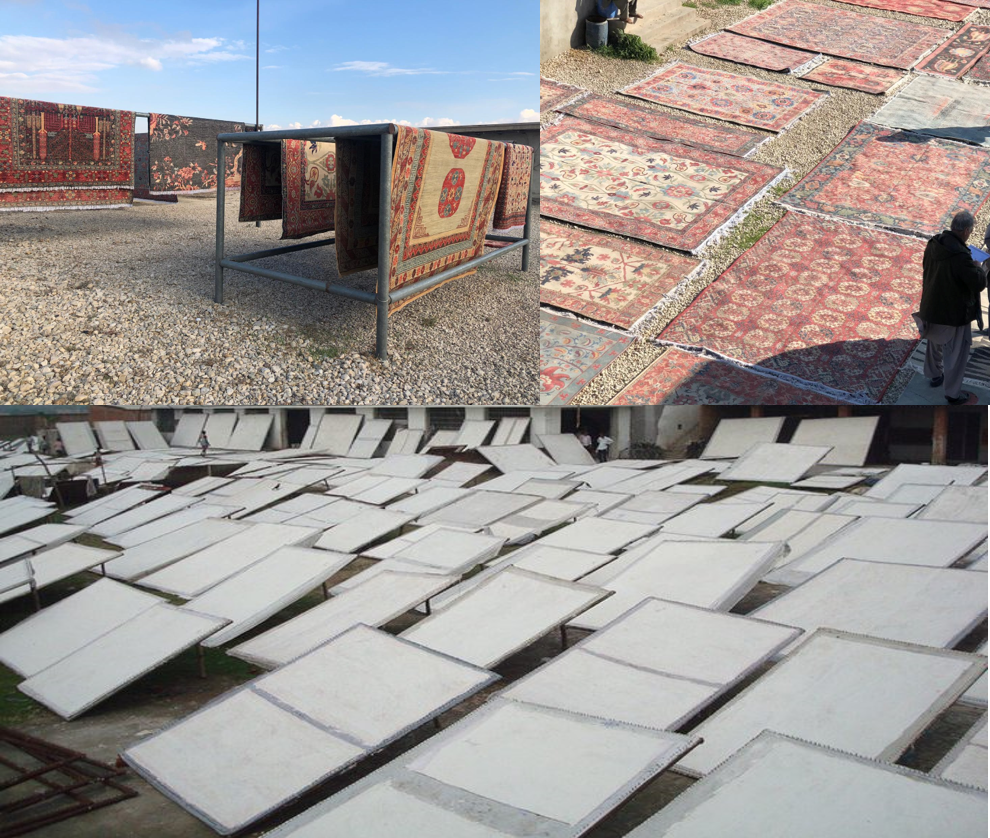
Washing and Sunlight Drying
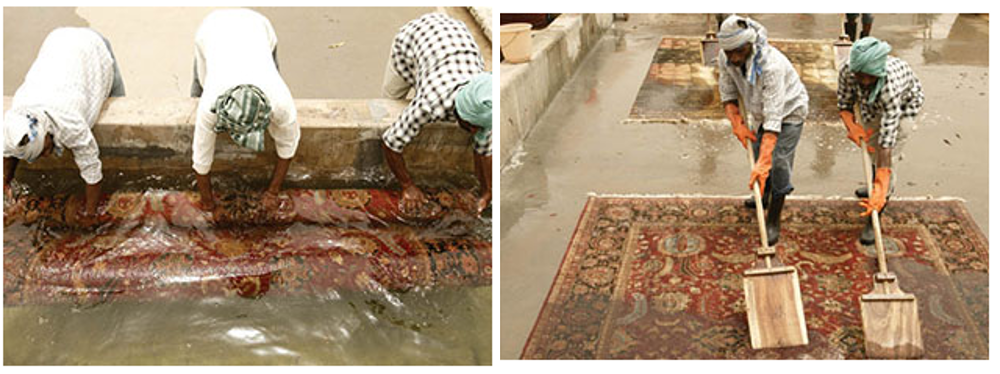
After weaving, the rugs are subjected to a rigorous washing process. This not only cleans the rug of any residual dirt or loose fibers but also enhances the natural luster of the wool and silk, making the colors appear richer and the fibers softer.
Post-washing, the rugs are carefully dried. This is often done naturally in sunlight, which is gentle on the fibers and helps to set the colors. Proper drying is crucial to prevent mildew and maintain the rug's structural integrity.
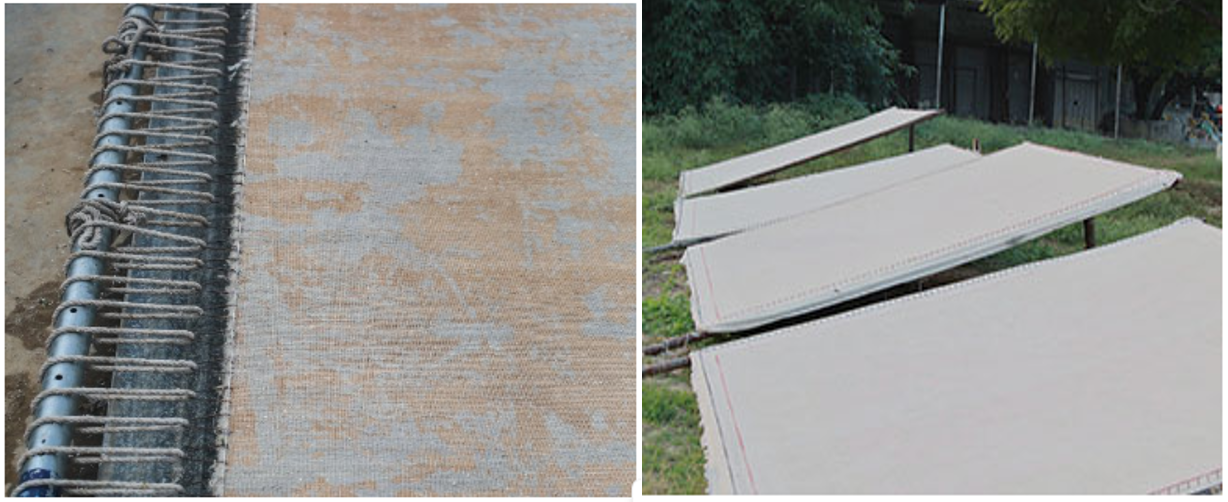
Stretching & Blocking
After the washing process, a rug can naturally lose its shape. Stretching (or "Blocking") is the essential step where we restore the rug’s true dimensions.
The rug is dampened and secured onto a heavy-duty frame. Artisans use tension to pull the edges until they are perfectly straight and the corners are exactly 90 degrees. This ensures your rug sits absolutely flat on the floor without "waves" or curled edges, maintaining its symmetry for decades.
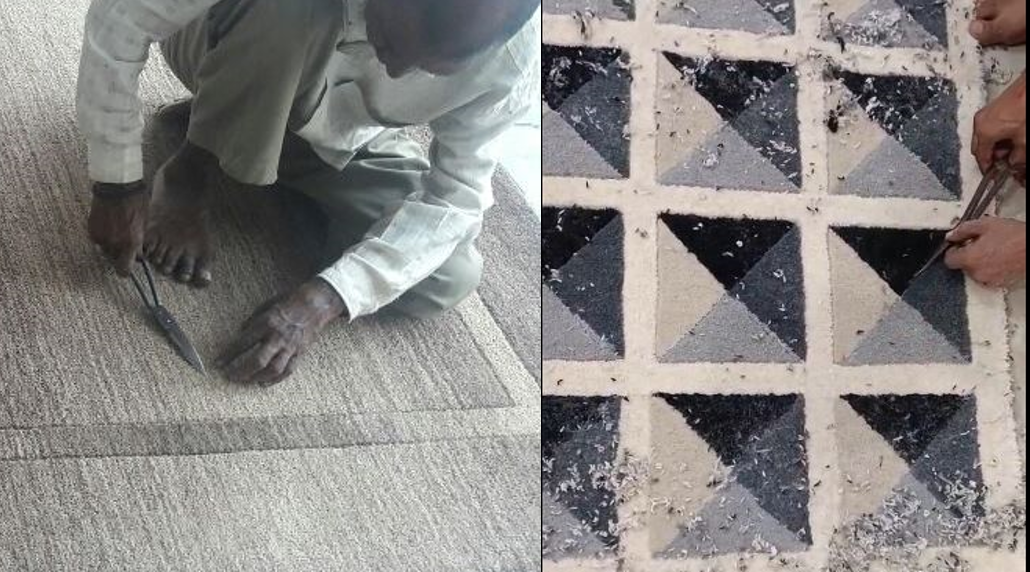
Clipping & Shearing
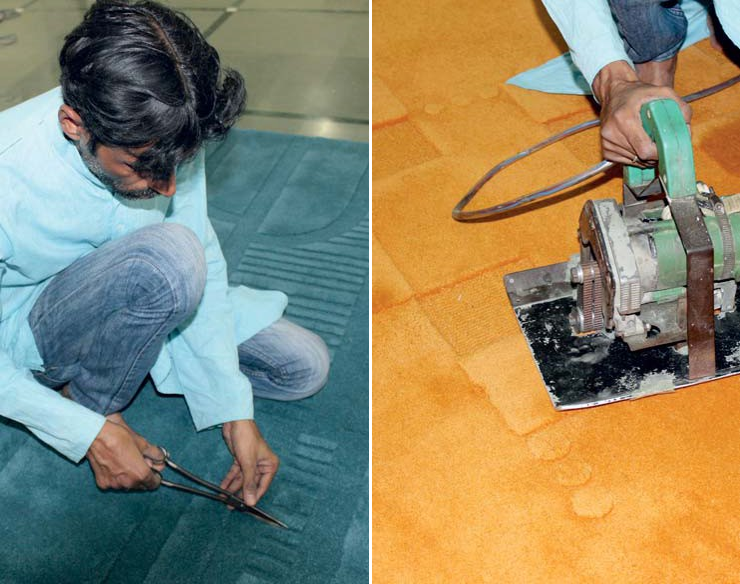
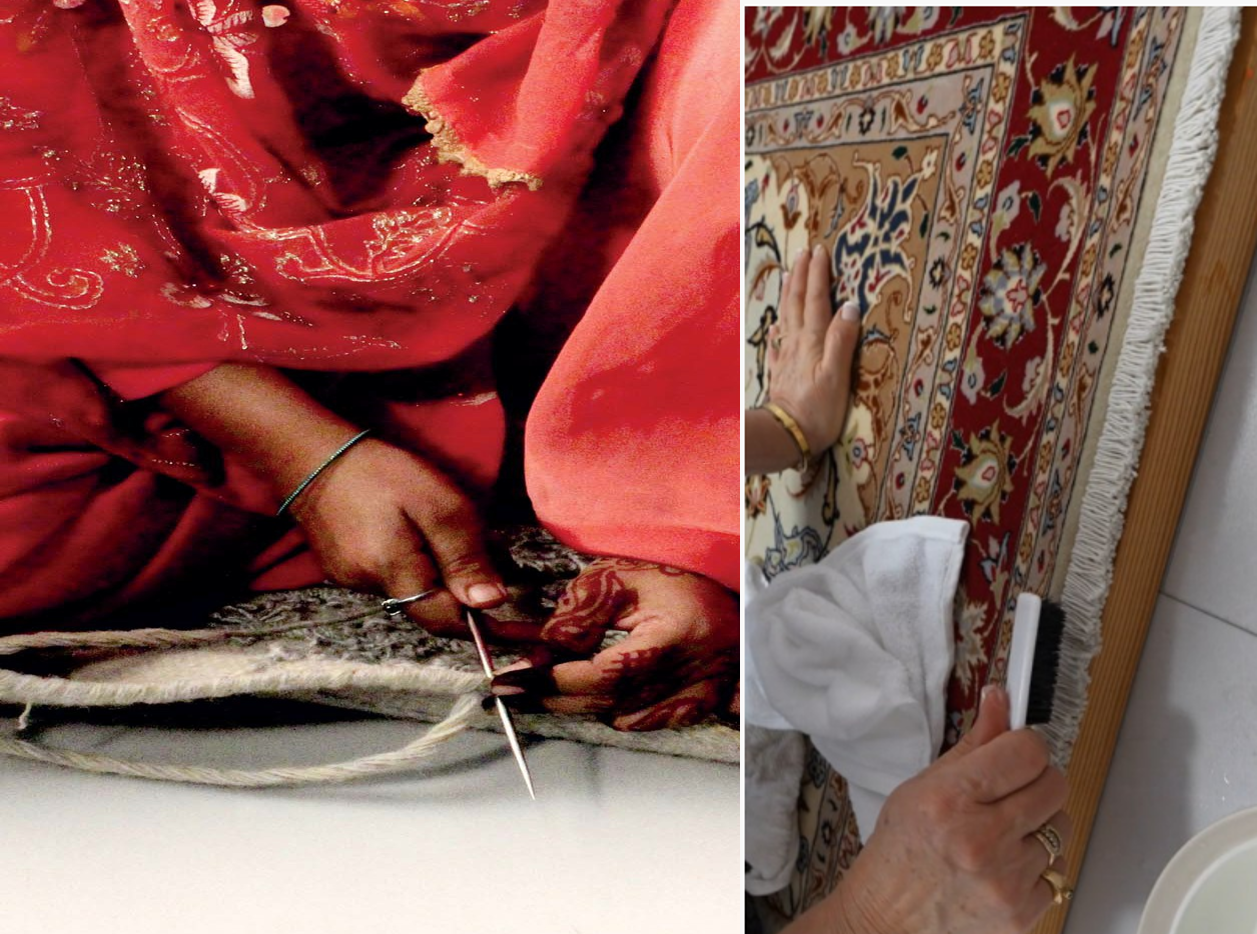
Once the rug is dry and straight, it undergoes "Clipping." This is a meticulous hand-process where artisans use small, razor-sharp scissors to refine the design.
Artisans trim away any stray fibers and "open" the lines between different colors in the pattern. This creates sharp, clean transitions between colors and motifs, making the design "pop" with high-definition clarity.
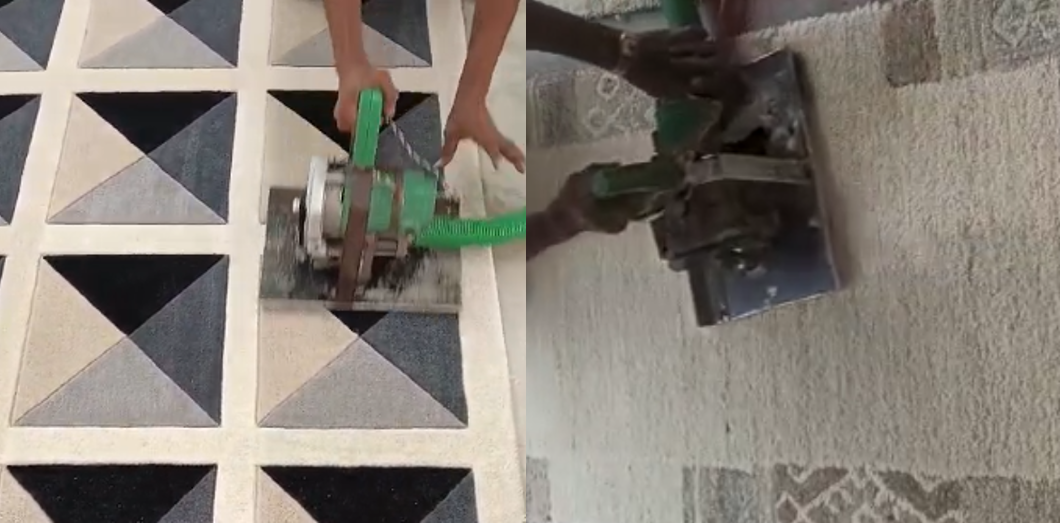
For pile rugs (hand-knotted, handloomed and hand-tufted), a crucial step is shearing. Artisans use specialized electric shears to trim the pile to an even, desired height. This process refines the rug's texture, defines the clarity of the design, and gives it a smooth, luxurious finish.
Carving & Edge Binding
For certain designs, especially in hand-tufted rugs, a technique called carving or embossing is applied. Artisans hand-carve along the contours of the design elements, creating a multi-level pile that adds a striking three-dimensional effect and enhances visual depth.
The edges of the rug are meticulously finished. For many rugs, this involves strong hand-binding to secure the sides. For hand-knotted rugs, the warp threads at the ends are often hand-knotted into decorative fringes, which are integral to the rug's structure and aesthetic.
The Final Inspection
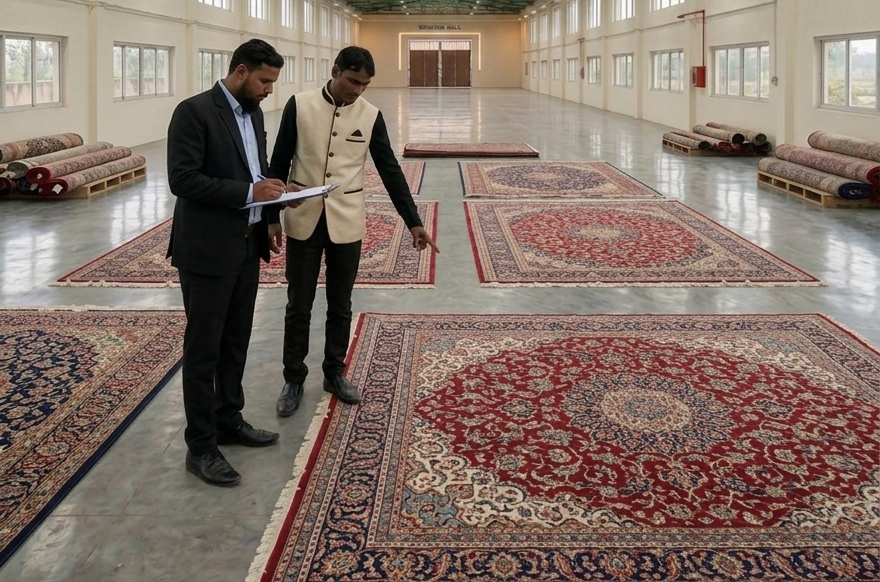
Every rug undergoes a rigorous final inspection by our quality control team. This comprehensive check ensures the rug meets all design specifications, is free from defects, and upholds the impeccable quality standards of Shahar Rugs International.
Packaging & Shipping
Cleaning & Rolling
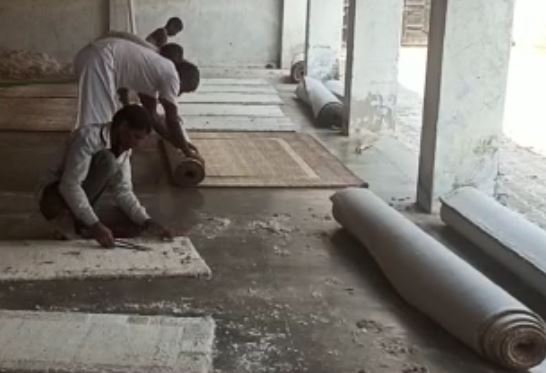
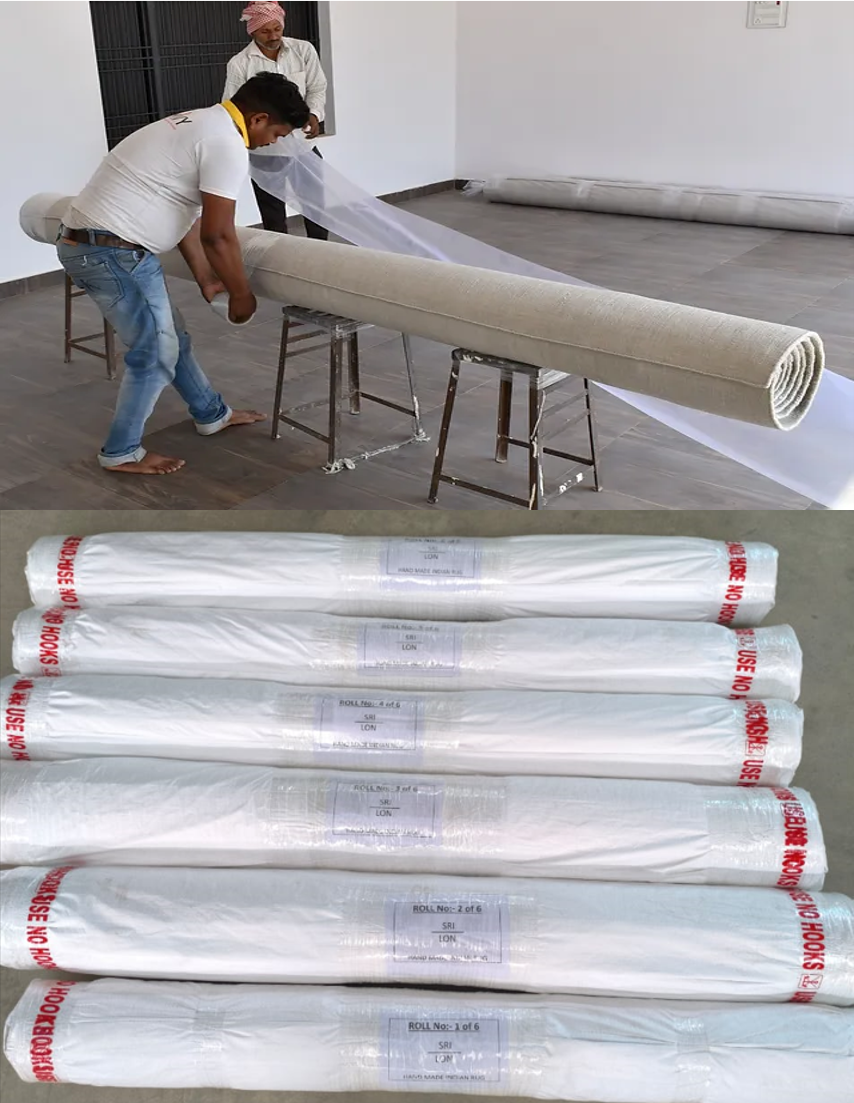
The rug is thoroughly cleaned one last time and then carefully rolled to prevent creasing or damage.
Protective Packaging
Each rug is meticulously wrapped in protective materials, typically several layers of robust plastic and often a final layer of woven fabric, to shield it from dust, moisture, and potential damage during its journey.
Labeling & Documentation
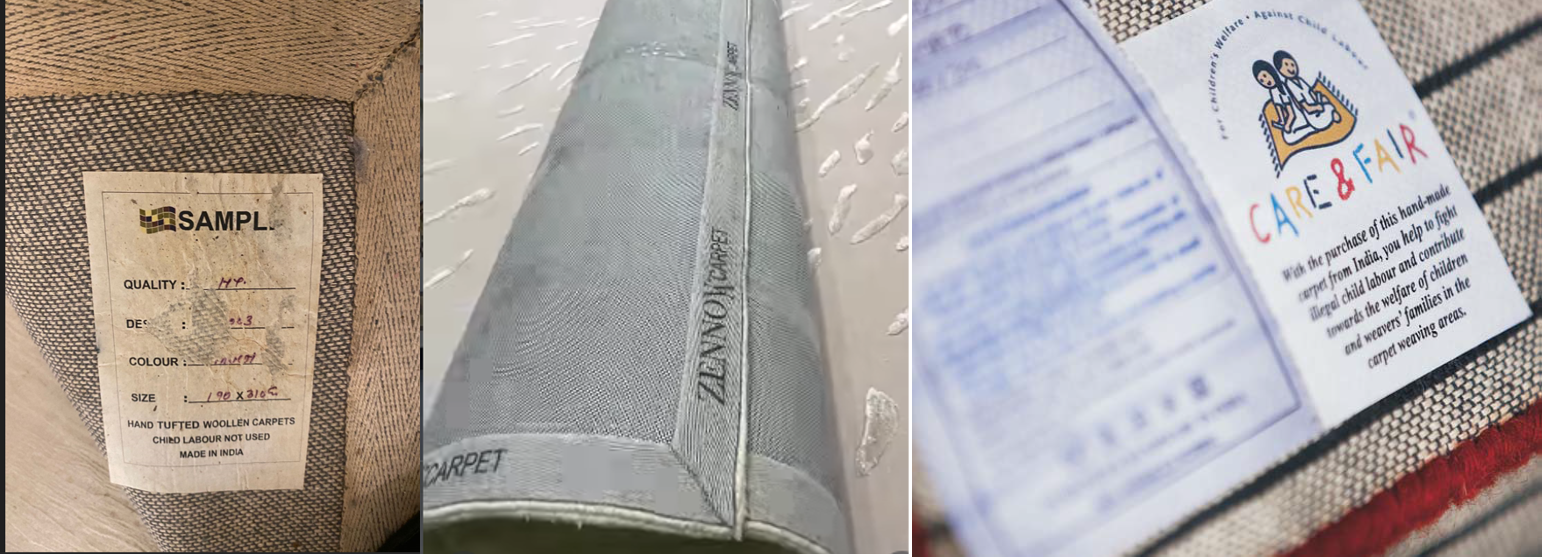
Appropriate labels detailing the rug's specifications, origin, and care instructions are affixed. All necessary export documentation is prepared to ensure a smooth customs process..
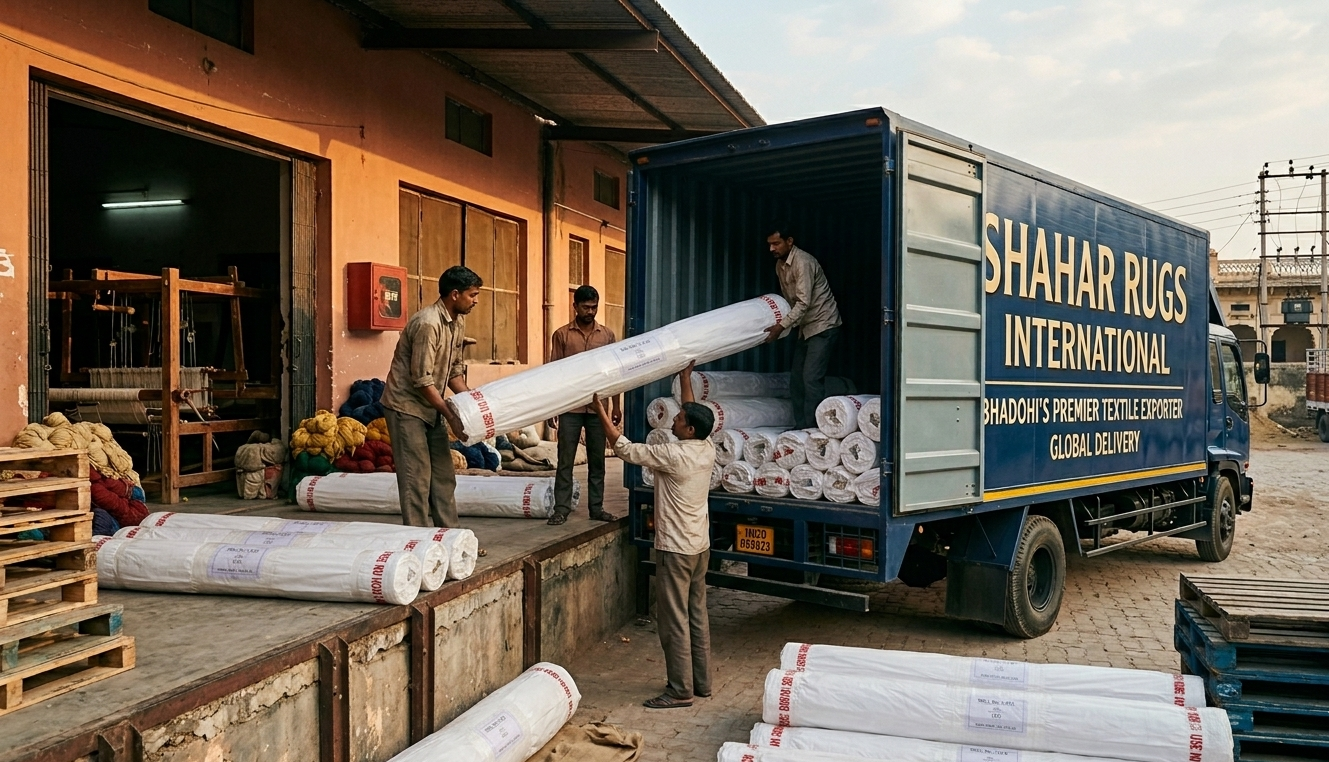
Loading for Dispatch
Finally, the meticulously packaged rugs are loaded securely for shipment, ready to embark on their journey from the heart of Bhadohi to adorn homes and businesses across the globe.